Vishalini Sivarajah
By Vishalini Sivarajah
In May, I travelled to Kosovo with ten other students from McMaster University on a trip facilitated by the Global Youth Volunteer Network, a non-profit volunteer organization. For the month, we worked with an organization called the Balkan Sunflowers (BSF). Rand Engel, an American living in Kosovo, founded this organization in 1999 in the wake of the Kosovo War, which was a step in the journey to Kosovo’s independence from Serbia. Independence was declared in 2008, but it is still not recognized by Serbia.
Kosovo is composed of five ethnic groups: Albanians and Serbians, who form a majority, and the Roma, Ashkali and Egyptians, who form a minority. Ethnic Albanians in the area wanted to separate from Serbia and form their own country. The resultant war was a continuation of a long existing conflict between Albanians and Serbians, which is thought to have started as early as the 14th century.
This area in Europe made headlines worldwide in the 1990s as the Yugoslavia Confederation crumbled, and as ethnic conflicts and cleansing began. In the midst of these wars, the minority groups in Kosovo, namely the Roma, Ashkali and Egyptian communities, were caught in the middle. They lived in fear and were often threatened by once friendly neighbours merely because of their ethnicity. Living in this constant fear made it difficult to lead a normal life, and as such, many stopped going to school.
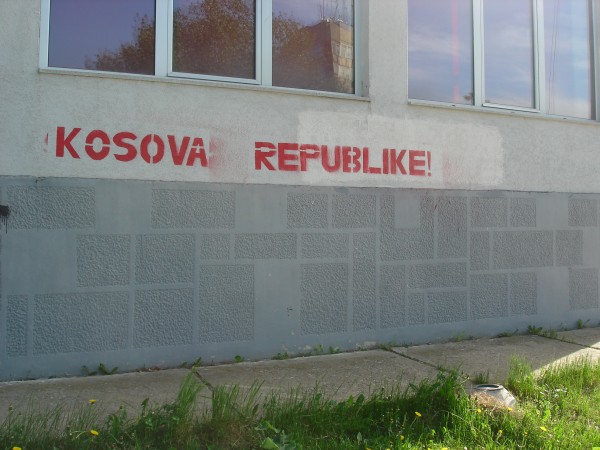
This spray painted phrase can be found on many buildings throughout the country
In the Roma community, the students that did remain in school had difficulty with the language barrier, as they did not speak the majority languages (Albanian and Serbian), but instead spoke various dialects of the Romani language.
Continue reading ‘A Different Perspective: My Global Experience in Kosovo’ »