By Francis Lam
In the atlas of “Little” neighborhoods — the Little Italys, Little Tokyos, Little Indias of the world — New York’s Little Sri Lanka may be the littlest.
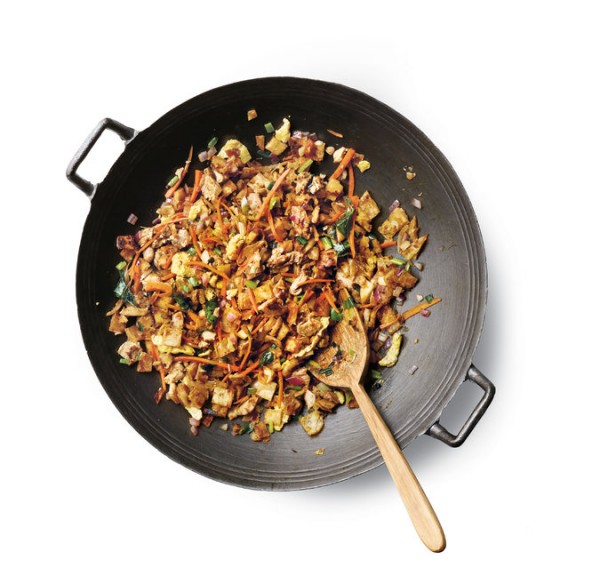
Chicken Kottu Roti Credit Christopher Testani for The New York Times. Food stylist: Maggie Ruggiero. Prop stylist: Pamela Duncan Silver.
It’s just one and a half blocks, and its groceries and restaurants share the Staten Island North Shore streetscape with bodegas and an Albanian pizzeria. But around here is where you’ll find one of the largest Sri Lankan communities in the United States — roughly 5,000 people, many of whom came to escape their homeland’s decades-long civil war, starting in 1983.
On the blocks straddling Victory Boulevard and Cebra Avenue, a restaurant visit can become a crash course in Sri Lankan cuisine. Or you might have that lesson administered by Sehan Jayathunga, at his father’s Lanka Grocery; he will pull down every third product from the shelves, eager to tell you how to use it. A dish that gets him especially excited is kottu roti, which is part food, part show: flaky flatbread, stir-fried and chopped with eggs and aromatics, finished with a pour of curry that sizzles into a cloud of fragrant spice as it hits the heat. At night, the streets of Sri Lankan cities ring with the snap of metal spatulas chopping up kottu roti on hot griddles.
If I really wanted to experience the dish, he suggested, I needed to cook with Sanjeewa Gooneratne, who shows up at events around town with a griddle the size of a sled.
Sanjeewa greeted me warmly at his door, then asked if I’d be taking pictures; he’d put on a nicer shirt if so. He came to the States in 1999, leaving his wife, Shyamali, and their three sons back in Colombo, the country’s capital. Working at a gas station in New Jersey, he tried to assuage his loneliness with the flavors of home, thanking his god and his parents every day for teaching him to cook, and calling Shyamali at night for recipes. Years later, after the family reunited, he and Shyamali took their cooking show on tour, their kottu roti drawing crowds at summer cricket matches.
The couple showed me how to make the simple chicken curry that sauces the dish, tossing the meat with curry powder and soy sauce, sautéing a few aromatics, then setting it to simmer. When I noted that they hadn’t used a seasoning they brought out, Sanjeewa just shrugged, his way of saying, “Many ingredients optional.”
Once the sauce was ready, Sanjeewa fired up the griddle. Shyamali danced around him, adding oil and eggs to his left, flicking spoonfuls of ginger and fragrant herbs to his right. She tossed in handfuls of onions and carrots and bread as Sanjeewa’s spatulas rhythmically chopped at the sizzling kottu-to-be. Soon it sounded as if we were in a machine shop, and Sanjeewa shouted: “This is why nobody makes this inside! My wife likes it loud, though, that is why she likes yelling at me.” She laughed, swatting at him, and they handed me a plate.
The roti had the satisfying chew of all good bread, each bite leavened by the slight crispness of carrots and onions. The flavor was rich, round and fat, carrying warm, ephemeral spices — a flavor that makes you eat bite after bite so that you can’t forget it.
How fitting, then, that this is a food tied to memory. The dish originated in the Tamil regions of the country, but was adopted by the Sinhalese; during the brutal civil war between the two ethnic groups, this dish remained a tiny thing they held in common. And here in the States, “it’s the most special dish to remind you of home,” as another Sri Lankan, Danaja Fernando, told me. Then he corrected himself: “Actually, no. Your mom’s food reminds you of home; kottu roti reminds you of being in Sri Lanka.”
Christopher Testani for The New York Times. Food stylist: Maggie Ruggiero. Prop stylist: Pamela Duncan Silver.
Chicken Kottu Roti
Recipe
This recipe for kottu roti, a popular Sri Lankan street food, comes from Sanjeewa Gooneratne, who prepares the dish at events around New York on a griddle the size of a sled. A flaky flatbread is stir-fried with eggs and spices and finished with a curry sauce. Don’t let the long list of spices deter you from making the dish. You can omit a few and still experience its fantastic depths of flavo
Adapted from Sanjeewa and Shymali Gooneratne
FOR THE CURRY SAUCE
1 ½ pounds boneless skinless chicken thighs (about 6 thighs)
2 teaspoons soy sauce
2 teaspoons Worcestershire sauce
½ teaspoon kosher salt
3 tablespoons Sri Lankan roasted curry powder
3 ½ teaspoons Sri Lankan chile powder (or other medium-hot chile powder)
3 tablespoons vegetable oil
1 tablespoon minced ginger
4 cloves garlic, sliced
1 tablespoon minced pandan leaves (or to taste)
4 curry leaves (or to taste)
2 green cardamom pods
1 2-inch stick cinnamon
1 small hot green chile, sliced
1 medium red onion, thinly sliced
5 ounces diced tomato
1 cup coconut milk
1 tablespoon cider vinegar
Salt, to taste
FOR THE KOTTU ROTI
½ cup vegetable oil
2 eggs, lightly beaten
2 teaspoons finely minced ginger
1 tablespoon chopped pandan leaves
10 curry leaves
5 scallions, cut in 1/2-inch pieces
1 cup julienne carrots (about 1/4 pound)
1 medium red onion, diced
1 teaspoon soy sauce
Salt, to taste
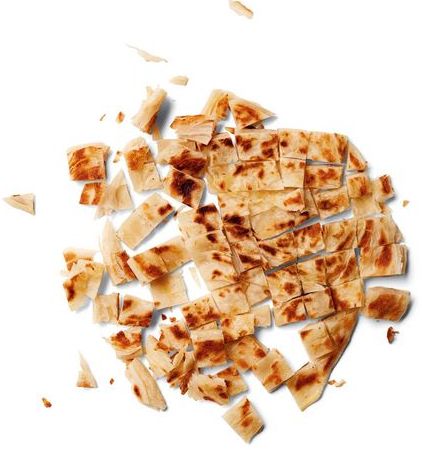
1 pound Sri Lankan roti, cut into 1/2 inch pieces (or other flaky flatbread, like Indian paratha)
2 chicken thighs, curry, chopped
¾ cup sauce from chicken curry
PREPARATION FOR THE CURRY
1. In a mixing bowl, combine the chicken, soy sauce, Worcestershire sauce, kosher salt, 1 tablespoon curry powder and 1 1/2 teaspoons chile powder. Marinate 30 minutes to overnight.
2. Heat oil in a large saucepan over medium-high heat. Add the ginger, and sizzle about 20 seconds. Add garlic, pandan leaves, curry leaves, cardamom and cinnamon. Cook, stirring, until the ginger and garlic are golden brown. Add chile, onion and a generous pinch of salt. Stir until the onion is softened and translucent, 3 minutes. Add remaining curry and chile powders, and cook, until darkened and aromatic. Stir in tomato.
3. Add chicken, coconut milk and enough water to cover, about 1 cup. Bring to a boil, and add the vinegar and salt to taste (you may not need it). Simmer, partly covered, for 35 minutes, until the chicken is just cooked through. Reserve for kottu roti. Leftover curry may be frozen.
FOR THE KOTTU ROTI
1. Heat a large, well-seasoned cast-iron pan or wok over high heat with 2 tablespoons of oil. When the oil just starts to smoke, add the eggs, and scramble them until cooked dry. Transfer to a bowl, and wipe the pan clean. (Alternatively, you can scramble them in a nonstick pan.)
2. Return the pan to medium heat. Add 3 tablespoons of oil and ginger. When it is aromatic, add pandan and curry leaves, and cook, stirring, until the ginger is light golden, 20 seconds. Add scallions and carrots. Stir for 1 minute, then add onion. Cook, stirring, until onion has only a little snap, about 3 minutes. Add the soy sauce and salt to taste, and remove to a bowl. Wipe the pan out.
3. Return pan to medium heat, and add the remaining 3 tablespoons of oil. (If the flatbread you are using is very oily, use less oil in the pan.) When it’s shimmering hot, add roti, and stir until it feels dry and fluffy, about 5 minutes. Add chicken, cooked vegetables and eggs. Add the curry sauce, and continue to stir until hot all the way through. Taste, add more salt or soy sauce if necessary and serve.
NOTE
Feel free to add or omit seasonings.
courtesy: NYTimes