By
Vishnuguptha
“Nations, like stars, are entitled to eclipse. All is well, provided the light returns and the eclipse does not become endless night. Dawn and resurrection are synonymous. The reappearance of the light is the same as the survival of the soul.”
~ Victor Hugo
In the ancient world, rulers ruled by dynastical power. Family-rule ruled the waves and power flew downwards from the parent generation to that of the children. The question of succession was never an issue, provided the ruler had children of his or her own. Even in the event there were no children to succeed, succession from brother to brother or to a close blood relation was never questioned by the subjects.
This was so in the West as much as it was so in the other parts of the world- Asia, Africa or the Middle-East. Successor’s sole qualification for the throne was ‘accident of birth’; blood relationship to the throne became the one and only prerequisite for an heir-apparent.
This tendency was even more evident and manifestly present in the East, especially in South Asia; India and Sri Lanka in the ancient times and which region now includes Pakistan and Bangladesh as well. South Asia is in fact the mother of all regions where ‘accident of birth’ disorder has been dominating the succession process almost without a break. In the West, however, with the exit of monarchical powers from statecraft and politics and the advent of universal franchise that empowered folks who were thereto considered ‘ordinary’ and ‘mundane’, people began choosing their own masters and rulers.
While in the West this departure signaled a real change in the character and construction of the elective system, in South Asia particularly where personality cult and hero-worshipping were much more deep-rooted, the entry into electoral system of government based on franchise produced hardly anything different from the traditional rule from the throne by a King or a Queen. Subservience displayed towards the ruler and sustaining that subservience for a long period became persistent with the people of this bloc of countries. Whether this characteristic of a people could be due to a particular mindset that has been subjected to a very distinct school of thought which is essentially ‘Eastern’ or South Asian is a debate that most historians are engaged even now.
The Eastern school of thought, which is basically premised in the collective rather than in the individual, may have given rise to this hero-worshipping and personality cult singularity in the twentieth century. Especially, in the Indian sub-continent which came under the boots of the British colonial powers, this concept would have only hardened after the experience that the people of this region had to endure, particularly under some not-so-kind governors of the British Empire.
The Indian example of ‘entitlement syndrome’ is very obvious and the people seemed to have absorbed it and even willingly accepted it without question. The Nehru dynasty renders ample testimony to this and its continuation in the Twenty First century does not appear to be facing any obstacle whatsoever. The son of Rajiv Gandhi, Rahul’s deep involvement in Indian politics and even the current Prime Minister Manmohan Singh’s ready acceptance of Rahul as one of the logical successors to the leadership of the Congress Party are part and parcel of this ‘entitlement syndrome’ that is evident in the Indian landscape of politics.
When we consider how this ‘entitlement syndrome’ played out in Sri Lanka, particularly after Sri Lanka obtained independence in 1947, it is quite fascinating. The subservient manner in which the Sri Lankan people have embraced it and come not only to accept it as a matter of routine change but as a proud heritage of the system is baffling. It is specially so to the mind of an educated youth whose ancestral beginnings are as vague and dim as a distant mist and whose dedication and application to the task of managing life after finishing education is no second to that of any of these ‘entitled’ sons and daughters of those who consider themselves as the ‘legitimate’ passers of the torch of power and privilege to their offspring.
Entitlement syndrome has two sources from which it derives its energy and life: Firstly from the ‘Family’ unit and secondly from the position that the holder occupies.

Family-based entitlement syndrome
Starting from the Senanayakes right up to the current times of the Rajapaksas and thereafter to the Rajapaksas’ non-relative cohorts of Ministers’ sons, entitlement syndrome has played a decisive and critical role in the passing of the mantle in all political parties. Let s examine these cases one by one:
Senanayake entitlement syndrome
D S Senanayake, Sri Lanka’s first Prime Minister, when he had the choice of naming his successor, vicariously suggested that his son, the “unwilling Dudley” was the most eligible to succeed him and the excuse that he gave at the time was that Dudley, his son, was the person who was most liked by the electorate. At the time of D S’s suggestion coming to fruition, S W R D Bandaranaike had already left the United National Party-led government and formed his own Sri Lanka Freedom Party (SLFP). Sir John Kotelawala who was the Leader of the House, the position of the traditional successor to the Prime Minster though another relative of D S was overlooked in favor of his son. In the case of power flowing from D S to Dudley it was not based on Dudley fighting for it. It was in fact the other way about. It was the father more than the son, who decided to whom the power-mantle should be passed on. The entitlement syndrome was in the father and not the son.
Bandaranaikes
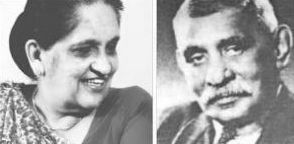
The Bandaranaikes are a whole different chapter and the family dynasty that started with the assassination S W R D with power being bestowed on Mrs. Bandaranaike by the leaders of the Sri Lanka Freedom Party, began a storied saga of family bandyism that is continuing to this very day. Mrs. Bandaranaike was obsessed with the notion of entitlement sense and she willfully nurtured and nursed her son Anura to assume the leadership of her Party and Anura too reciprocated by being obsessed with the entitlement syndrome; he started behaving like an heir apparent very much before he entered politics. All the while, the general membership of the SLFP too acted most subserviently, a trait that is very much in evidence even today, and embraced Anura and thereafter Chandrika as the logical successors to the throne. However, during Mrs. Bandaranaike’s time, the entitlement syndrome spread its virus right throughout her blood-relations. Some of the most lucrative government jobs were held by members of the Bandaranaike or Ratwatte clans. But thanks mainly to the effective campaign run by J R Jayewardene, the Leader of the Opposition and the UNP against this deep-rooted ‘family tree’ of the Bandaranaikes, the people of the country in 1977 expressed their displeasure in the most articulate fashion and ousted the Bandaranaikes from power by handing them a humiliating defeat at the General Elections.
Rajapaksas
The Rajapaksas are another story altogether. They seem to have mastered the craft of family-bandyism to an exact art and skill and the manning of even not-so-important government positions through their kith and kin is being accepted by their cohorts and henchmen as a matter of fact. The Rajapaksas have shown the country that accident of birth is no accident at all but, as Rudyard Kipling once described the burden of governing India by the British Empire, as a ‘divine right’. The entitlement syndrome is eating into the fabric of the ruling clan and has taken possession of the whole body politic of Sri Lanka and what we are witnessing today as excesses by the sons of some of the senior Ministers of the Government such as Ministers Keheliya Rambukwella, Maithripala Sirisena and Mervyn Silva are not the disease nor are they the symptoms; they are in fact some dangerous and even more lethal side-effects of the entitlement syndrome.
Entitlement syndrome via position
It is not complete if the other aspect of the entitlement syndrome is not laid out. Some contract this disease as a matter of holding a particular position of power. The finest example is the current Leader of the Opposition. And it comes via a close associate of mine who was an eye-witness to the confrontation between Gamini Dissanayake and Ranil Wickremesinghe when Gamini confronted Ranil with regard to the position of the Leader of the Opposition in 1994 at the Temple Trees. Ranil told Gamini thus: “Gamini, I thought that as the outgoing Prime Minister, I should be the Leader of the Opposition.” In that instance, the source of Ranil Wickremesinghe’s ‘entitlement syndrome’ was the position that he was holding at the time which led him to believe that he was ‘entitled’ to a subsequent position purely because of the current or past positions that he had held.
Today the country’s body politic is infested with this dangerous malady which I call ‘entitlement syndrome’. Its viral effects have seeped deep down the skin and gone to the marrow of the bone and while residing there, it’s consuming the very body that it has chosen to inflict and infect. It has destroyed the individual patients; it has shaken the family unity, it has dismantled the moral compass of our society. It is more than a disease, it is a serious scourge and until and unless we get rid of this scourge- entitlement syndrome- we’ll be fast approaching sure destruction as a decent and democratic society.