By
Susil Siriwardhana
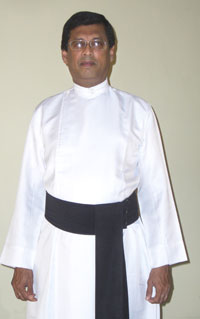
Rt. Revd. Dhiloraj Canagasabey-pic: ft.lk
When the Pastoral Letter of 01/2013 of Rt. Revd. Dhiloraj Canagasabey, Bishop of Colombo, reached his diocesan flock, it received an unusually wide response for its principled and decisive content.
It began: “My dear Brother s and Sisters in Christ, I write this Pastoral Letter to you as your Bishop as we approach the 65th anniversary of our national independence. It is with a heavy heart that I write it, the reason being that in the past few days we have seen the complete collapse of the rule of law in our nation. We no longer appear to be a constitutional democracy.”
It went on to propose several spiritual initiatives, one of which was: “We as a diocese will congregate on 4th February at 9 am, dressed in white, for a service to continue our Time of Lament. Those who are unable to be present at the Cathedral for this service are encouraged to gather in their own churches at this time”. Readers perceived it as a convincing wake-up call, but did not quite know what to expect. What a packed Cathedral – numbering thousands – affirmed, for nearly three full hours, exceeded their wildest expectations! All Sri Lanka’s communities, all age groups, all genders, all classes, all religions, all cultures, all income groups, were there, and were amply rewarded.
The formatting of the non-stop three hour celebratory service as an Extended Day of Lament, was brilliant. There was a clear direction and a momentum full of restraint. It focused and refocused on the central theme of taking accountability before God for our numerous acts of omission and commission, which had up to now been conveniently taken for granted, individually and collectively.
A liturgy composed with minute attention to detail and inner resonance, carried the worshippers in its rapt meditativeness. Its all pervading undertow was, Nation Building – every line and word was in all three languages. There were no abbreviations. Vistas and associations from our plural cultures were melding and value adding meaning with impact. Everything was kept short and pithy.
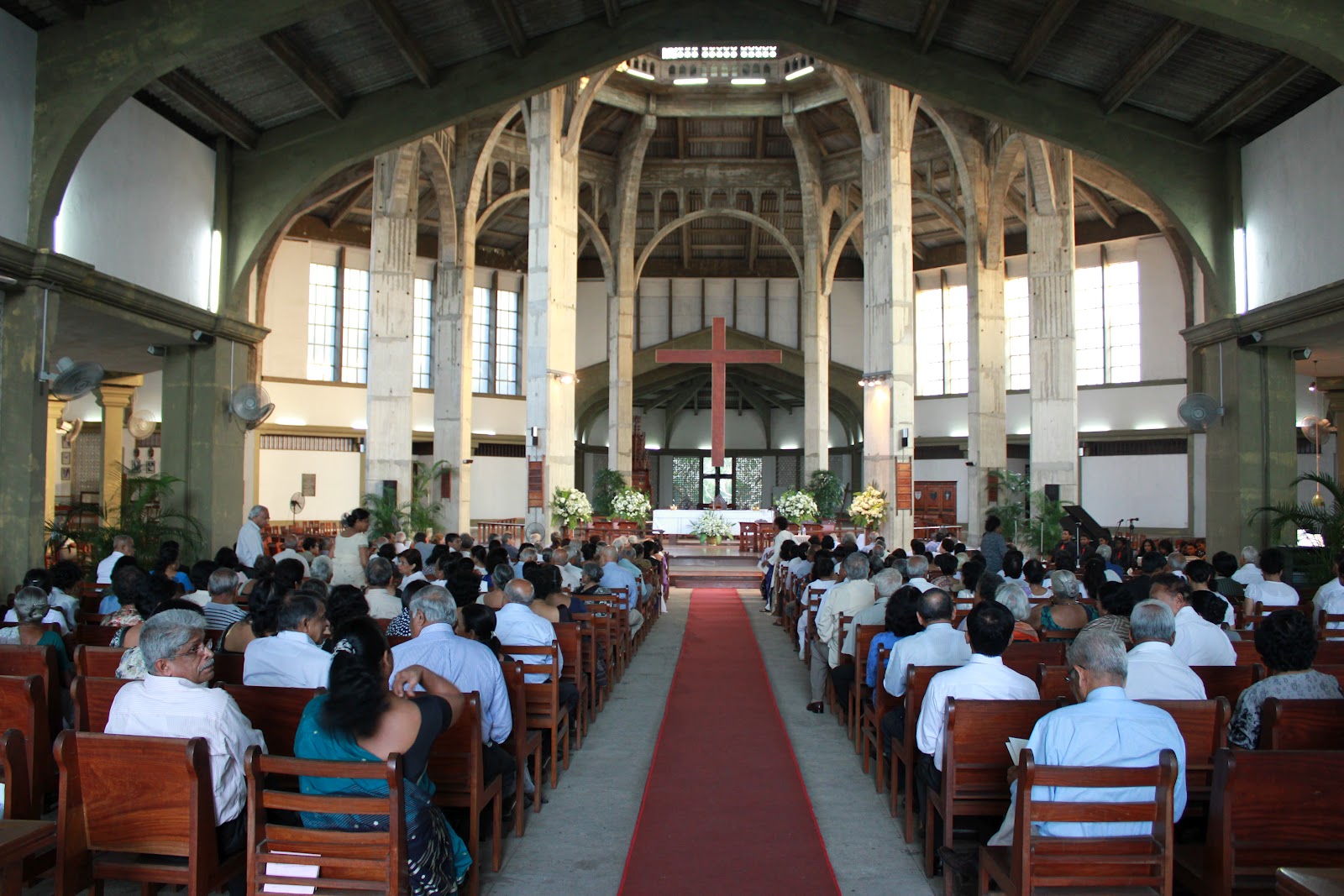
Cathedral of Christ the Living Saviour, Baudhaloka Mawatha ~ file pic courtesy of: damayanthawickremesinghe.blogspot.com
The success was in the ensemble effect of the sequencing. Starting with the National Anthem, the juxtaposed music, singing, silent meditations, sequences of soft music, hymns, biblical readings, five minute three language reflections ,with the final one by the Bishop himself, the Lord’s Prayer, a Declaration, followed by the triumphal classic, We Shall Overcome, The Hymn to Lanka and the final Blessing, built up into an unforgettable climax. There was a strong spiritual content in all the meditations and texts ,because they underscored the injustices, the lies, the violence, the injuries, the hypocrisies, the crimes, and all such errors of commission, throughout the service.
The nation building theme underlay the total service in a way that has not been attempted before.All three languages were used and every song, text, reflection was translated. Being kept short, they were not boring. The technology of projecting the words of hymns, songs and texts in three large screens in keeping with the seating in the Cathedral, enabled those within seeing distance to follow and participate all the better. Unfortunately, there were no such screens for those too far away to read the projected words. The service was as it were a cavalcade of the nation in a perahera tableau and rhythmic sung poetry.
The service was singularly memorable for many achievements. One was the immeasurable beauty of cultural diversity of this nation. Young and old people of all ethnicities, all religions, all linguistic groups, all income groups, all faiths, women in their numbers, laity and priests, had united hearts and minds in solidarity. It was a kaleidoscope inherent in the microcosm.
The liturgical arrangements evoked memories of the past work (like the Workers Mass) done by the Christian Workers Fellowship by pioneers such as Vijay Vidyasagara, Yohan Devananda and Austin Munasinghe. It was fulfilling to see that these early experiments were now being absorbed into the mainstream.
The texts and reflections were all invitations to look within and question ourselves individually about our individual roles in the events of our society and its history. Hence they were all selected for their relevance to troubled times. They dealt with the struggles and overcoming of conflicts, divisions, violence, ruptures and enmities. Instead was being offered hope and forgiveness, accepting truth and confessing guilts and errors. The cleansing of the self took us to our spiritual roots. All this in the presence of God, the forgiver of sins and prince of infinite love.
Finally, the service was a lesson in the dynamics of spirituality. The whole service was framed within those parameters. The imperatives of spirituality guided and steered the whole composition of the service. Great maturity and care had been devoted to select the right songs, hymns, words and readings and they were all kept short. Many young people, schoolchildren in their teens, did the readings in the three languages. The point being made was that all these are spiritual resources.It was an inspired experience in community and democracy. Consciousness raising took place in an unjaded and revitalized fashion. It was so because there was a complete abjuring of rhetoric and cliché. There were no pseudo polemics and debates. All that which had been discredited, had been rejected by the spiritual yardsticks used. One breathed again, the wisdom and heightened spirit of the vision and mission of Bishop Lakshman Wickremasinghe and his illustrious forbears.
The service was all the more memorable and inspiring for the quiet dignity and low key texture. There were no gimmicks—only the serene joy of Sri Lankans holding each others’ hands to atone and fulfil the promise of independence. We need to give thanks to the Bishop of Colombo and his dedicated team of priest and laity for the whole experience.
In another key, it was a milestone in the journey of civil society.