By
Prof.G.L.Peiris
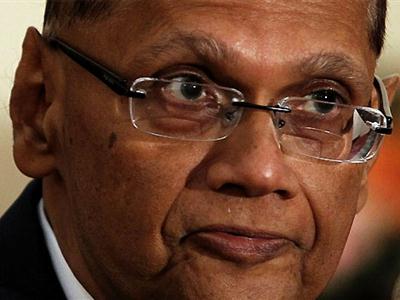
Prof.G.L. Peiris
(Minister of External Affairs Professor G.L.Peiris made the following statement exclusively to the Sunday Island regarding the statements made by several foreign governments about the impeachment of the former CJ Shirani Bandaranayake. Professor Peiris stressed that the tenure of the previous chief justice has been brought to a closure following proceedings in accordance with the constitution and standing order 78A, a new CJ has taken office in an appointment made fairly and squarely within the four corners of the constitution, and that in his view the most important thing is to move on. He stated that to litigate to have the appointment of the new CJ struck down, is not a productive endeavour. What follows is the External Affairs minister’s statement which also responds to the issues raised by countries like the USA, Britain and Canada with regard to the impeachment.)
There are obvious gaps in the law as it now stands. When impeachment proceedings are instituted against a chief justice, the CJ simply carries on, performing all the functions of his or her office, including nominating benches.
Even in a situation where the CJ has a direct interest in the relevant proceedings, it is he or she who nominates judges to benches. Through the whole process of the impeachment, the process of application for a writ of certiorari against the findings of the PSC, the reference by the Court of Appeal for an interpretation of Article 107(3), the power of nominating benches remained with the CJ. In the analogous case of an impeachment instituted against the president, there are constitutional provisions to restrict the scope of his official functions during that period – for example, he is debarred from dissolving parliament. There is no such restriction in the case of the CJ. That is a gap in the law which needs to be filled.
There is a chain of events which cannot be understood in isolation. A Supreme Court judgement accounted for the ruling by the Court of Appeal quashing the findings of the Parliamentary Select Committee.
Those decisions have brought about a situation which has enabled other elements for political reasons to make capital of the situation and to use it to launch a severe onslaught on the country. That is an attack on the national interest. The SC determination did two things which in my view, were totally indefensible. One was the patently wrong interpretation of Article 107(3). When the constitutional provision on its face offers parliament an alternative – to make by law or by standing orders – procedures to inquire into the allegations in an impeachment motion, that clearly gave parliament an option. In 1984, parliament exercised that option. There was a debate in parliament, and the members of the SLFP expressed a preference for legislation. But the then government in its wisdom decided to the contrary. That was a choice parliament was entitled to make.
To virtually strike out the words “or by standing order” under the guise of interpretation was not justifiable at all. This is not statutory interpretation – its law making. A court is not entitled to expunge or erase words which occurred in a statutory provision, nor is a court entitled to add to the words that are used in a statutory provision. That is the function of the legislature. There is a presumption that in a statute, no word is used unnecessarily or in vain. But they acted in violation of the very principle which they acknowledged explicitly in the judgement. The end objective of that whole process was the issue of the writ of certiorari to quash the proceedings of the PSC and the report. The jurisdiction to issue the writ of certiorari is vested by Article 140 of the constitution, in the Court of Appeal, not the SC. So Mr Chandra Jayaratne’s action originated in the Court of Appeal.
Justice Sri Skandarajah referred it to the SC purporting to act under article 125 which gave the SC sole and exclusive jurisdiction to interpret the constitution. But the final question was whether the Court of Appeal would issue the writ of certiorari or not. The writ of certiorari is a remedy conceived and developed by the court of Kings Bench in England and it has been received into the public law of the Commonwealth and the USA. There are certain requisites for the issue of the writ of certiorari. One of those requirements is that the order that is sought to be quashed by certiorari must be a final order. If it is an order that is subject to confirmation or approval by a superior authority, then that order is not amenable to the writ of certiorari.
So that meant that the Supreme Court had to argue that that the Parliamentary Select Committee was arriving at a final decision, which is obviously not the case. The Supreme Court made on that occasion some observations which are patently and obviously wrong. They say on page 23 of the judgement that the findings of the PSC is not subject to approval by some other authority. That is clearly wrong because it is subject to confirmation or approval, not by one authority, but two – parliament and the president. They are wrong when they say that parliament has to take cognisance of the findings of the select committee. That is not the case at all. Parliament can either accept it or reject it. A select committee is only a delegate of parliament. The ultimate power is in parliament. Then the court also says that the decision of the Select Committee is what finally takes effect. This is not the case at all. The PSC’s mandate is to investigate and report. Parliament will make its own decision whether to accept the report or not. Then the SC says that the address of parliament to be presented to the president is an inevitable consequence of the finding that the charges had been proved. This is by no means an inevitable consequence, because parliament can reject it.
The court is using this tortuous reasoning to arrive at the conclusion that there is a final decision (made in the PSC) when clearly there isn’t, in order to show that this fundamental requisite for the issue of certiorari is satisfied. Then we have the very strange language that was used by the court of appeal which says, that in view of the determination of the supreme court, it had ‘no alternative’ but to find the PSC report has no legal validity and to issue a writ of certiorari to quash it. So the court of appeal is clearly attributing responsibility to the SC. The SC determination is fundamentally flawed at least on two grounds. This is unique in the annals of legal history to use the writ of certiorari to quash a parliamentary proceeding. It flies in the face of 350 years of the development of the law. The proceedings of parliament are outside the jurisdiction of the courts. The demonstrably faulty reasoning does not reflect credit on the Supreme Court. Throughout the Commonwealth and in the USA, the courts have declined to exercise review in these matters.
In the USA the articles of impeachment are formulated by the House of Representatives, and the trial takes place in the Senate. In the famous case of Nixon v United States, Chief Justice William Rhenquist says that judicial review of the Senate’s trial would introduce the same risk of bias as would participation in the trial itself. This principle is further elaborated on in the Court of Appeal in England in the Pinochet case. Where Brown Wilkinson Lord Justice says that one of the indispensable elements of natural justice is that no man should be a judge in his own cause. That is stated by the courts of the USA and England as the fundamental reason why judicial review is refused in these circumstances.
That is exactly how the Supreme Court of the Phillipines handled the matter. Fourteen months ago, Justice Renato Corona sought the same remedy – certiorari. He was in exactly the same situation as Shirani Bandaranayake. The Supreme court of the Phillippines said that they cannot exercise jurisdiction because this is a matter for parliament. Our courts acted directly contrary to that principle and we see the consequences. It is known that other judges of the court of appeal do not share this view.
This situation has predictably been made use of by those whose objective is clearly political. The truth is that as this situation developed, there came a point at which, Shiarani Bandaranayake was only a part of the background. Various discrepant elements – politicians, NGOs, elements of the profession, who had very little in common among themselves, felt that here was a matter which can be used as a rallying point to attack the government. There were certainly foreign elements as well in this. Apart from the consequences within the country, much more important from the perspective of the national interest is the use that these elements were going to make use of the situation outside.
We have the situation in which for example, the prime minister of one country, specifically called for the reinstatement of the former CJ. On no basis can one justify that. How can the prime minister of one country call for the reinstatement of the CJ in another country? That is almost impertinent. There is no way that one can resist the conclusion that this is to directly intervene in the domestic affairs of another country. And all of this cannot be done under the guise of deciding not to attend the Commonwealth Heads of Government Meeting. The decision to have the 2013 CHOGM was taken in 2009 in Trinidad and Tobago and was reaffirmed in Perth in 2011. At that meeting, long before the impeachment issue arose, the PM of Canada brought up the issue of the 2013 Meeting and tried to re-canvass it. I strongly opposed that move. Fifteen countries took the floor to support me very strongly. It is only one country, New Zealand, that supported Canada. Mr Kevin Rudd, the then PM of Australia who was presiding said that the consensus is very clear – there is no way that we can take this up. So issues had been raised by Canada long before the impeachment situation arose.
Our position is that this is a hospitable country and we are making arrangements for CHOGM, but there can be no trade off, simply in order to secure the attendance of one individual or a few individuals. We cannot distort national policy. We cannot make decisions in this country, with an eye on who is coming and who is not coming. We cannot make decisions which are really the result of arm twisting. Decisions in this country have to be made in the interests of Sri Lanka. We cannot make decisions in order to induce people to come. This does not mean that we are impervious to criticism. But they cannot be the basis of national decision making.
This is not new. When the war was going on, there was tremendous pressure to stop the war. There was a demarche made to the president by two foreign ministers. After the war was over, GSP+ was withdrawn on the basis that we had not listened. So this is nothing new, this has been continuing. And now we are told that unless some things are done or not done, some people will not attend the Commonwealth meeting or that this matter will be taken up in other fora. At the end of the day the government has to act having in mind, the will of the people who elected them. It is principally to the people of the country that the government is accountable. If these matters are raised in any international forum, we can clearly explain, and justify the government’s position. Some people condemned this before the basic facts were known. Even though nothing whatsoever was known, judgements had already been made.
This country needs to be treated with dignity. We do not consider ourselves at liberty to make value judgements in public about the internal affairs of other countries. There must be a certain attitude to other countries, respect for their identity, for their decision making processes. We cannot feel at liberty to comment on sensitive internal affairs of other countries, to make threats, to talk of repercussions with regard to investment. That is not in keeping with the norms that should govern international discourse. There must be some restraint, you have to apply the brakes at some point and say, “I disagree with this, but it is not really for me to comment, that it does not fall within my ambit”.COURTESY:SUNDAY ISLAND