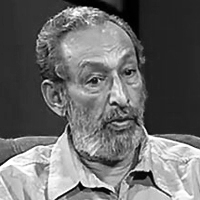
Vasudeva Nanayakkara
“All the rights secured to the citizens under the Constitution are worth nothing, and a mere bubble, except guaranteed to them by an independent and virtuous judiciary.”- Andrew Jackson
There was no surprise when the announcement came. The Ministry of Languages and Social Integration has formally withdrawn its support to an important event focusing on the judiciary and the role of judges themselves, just in the eleventh hour.
The event – the Annual Judges’ Conference is organized by the Judicial Service Association (JSA). In a strange turn of events, the two-day conference scheduled for 21 and 22 December and funded by the United Nations Development Programme (UNDP) under its Equal Access to Justice programme has suddenly seen their ministerial partner withdrawing support with no explanation.
This may be a minor development, taking into consideration the dramatic events connected to the Judiciary and the Chief Justice in the recent weeks. But this withdrawal signifies, even if the minister concern chooses to deny it officially and publicly, the pressure the government members are currently under – to disassociate themselves from anything that is linked to the Judiciary, affiliated bodies or the Chief Justice. Perhaps what is anathema to the minister is the programme’s focus – the role of judges, or worse, the chief guest – the incumbent Chief Justice Dr. Shirani Bandaranayake. The fact of the matter is, he did suffer from cold feet on 18 December.
Getting cold feet
The JSA is an association comprising judges of the original court, and was all set to conduct the programme until the ministry that was to officially partner in a sudden change of heart, did an about turn. It should not surprise anyone, given the relevant minister’s recent political performance, but the decision would put any self-respecting Leftist to shame.
Minister Vasudeva Nanayakkara nevertheless has had no qualms, and the Ministry Secretary has promptly informed the JSA in writing that the Minister did not wish to sponsor the programme anymore. No other explanation was offered (except the blatant bias that becomes evident through the ministerial decision). Sad indeed that a onetime fiery champion of rights now opts to play presidential lapdog, and changed his mind possibly because of the organizers’ choice of a chief guest.
At a time when more discussion and debate is required on the role of the judiciary and the individual role of judges, it is disappointing that a minister, who turned grey, demanding justice and equity in Sri Lanka and fighting for workers’ rights, not having the gall to partner an important meeting. After all, he was not required to stand next to the judges in Lipton Square (a former favourite venue) demanding justice for the Chief Justice or for to publicly clamour for the independence of the judiciary. Even a conference these days is proving too much to the government and its browbeaten members.
Forget the minor complications such as signed agreements, payments made for venues etc; but the core issue is that the minister clearly wants to play it safe. On the other hand, Vasudeva Nanayakkara’s example is not uncommon. In the past years, the citizens have been witnesses to dozens of unethical crosses over in Parliament, shameless turncoats and faith swappers with money and power being the core decision factors. Nanayakkara in this context is simply following what is now the established tradition.
If Nanayakkara’s lame response is indicative of a greater malady afflicting the entire government, then people should not feel confused as to why President Mahindra Rajapaksa feels the need to promise (always the fountain of justice that he is) justice to the Chief Justice in the event the Select Committee of Parliament (PSC) that probed her conduct has committed an injustice to her.
The event is likely to be an open forum to discuss the issues affecting not just the Judiciary but the Bar as well. A few months ago, Minister Rishard Bathiudeen got embroiled in an ugly spectacle that brought the wrath of the coated gentry upon himself for alleged assault on the Mannar Magistrate. Then there was also the attempted kidnapping of a much respected judicial officer, the Secretary of the Judicial Service Commission (JSC). Just days ago, President of the Colombo Magistrate’s Court Lawyer’s Association, Gunaratne Wanninayaka was threatened with death. Wanninayaka’s sin may be twofold. He has publicly rejected the PSC ruling as an exercise that failed to ensure due process and has expressed solidarity with the Chief justice. These are dangerous positions to take in a country like Sri Lanka where human rights are less respected than the rights of the feline or the canine kind.
A democracy in crisis
Among the biggest mistakes people commit these days please count any kind of support expressed in favour of the much-vilified Chief Justice. Yet, in the eyes of ordinary citizens, who have a smattering of understating of the concept of Natural Justice, she is a professional, wronged and judged in bad faith.
This also brings us to the concept of bad faith in common understanding. Bad faith in simple civilian understanding does not differ much from its legal definition. People, since time immemorial had a sense of justice, a good grasp of what is good and bad, what is just and unjust. They needed no elaborate legal definitions to follow societal norms. Their beliefs became values, crystallised later as established practices and further evolved as legal principles. Complicated judicial interpretations notwithstanding, most citizens today sympathise with the Chief justice, find the Judiciary insulted and subjugated both by the Executive and the Legislature.
Somehow, the turn of events in the present context indicate that it would be imprudent to oppose the government’s take on the Chief Justice. That’s exactly why the likes of minister Nanayakkara feel the necessity to be counted– with the official stance.
For years now, Sri Lanka’s democracy has faced a severe crisis- and now it has engulfed the Judiciary, threatening its very foundations. There is a strange sense of injustice to it all- but then again, it is Sri Lanka, a country in crisis without the maturity to understand it.
(Shades of Grey Column in the “Ceylon Today” Newspaper)