by P.K.Balachandran
10 October 2012 marks the 25th anniversary of the start of fighting between the Indian Peace Keeping Force (IPKF) and the Liberation Tigers of Tamil Eelam (LTTE), which engulfed the North and East Sri Lanka between October 1987 and March 1990.
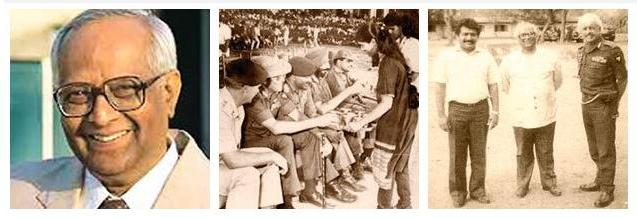
The two and a half year Indian campaign had military and political successes to show, in as much as the separatist LTTE was put to flight from Jaffna, forced into pockets in the jungles of the Wanni, and made to sue for peace with the Lankan Government to save itself from the marauding IPKF.
But sadly, the saga of the IPKF had a downside, which cannot be overlooked. The hard fought campaign may go down in military history as a telling example of the perils of rushing into war without adequate preparation.
Muddled political thinking on the mission’s objectives and methods, and lack of coordination between the various arms of the Indian Government, and between the three services, had a deleterious effect on the fighting forces, which had to leave the island in 1990 without fulfilling the stated objective of implementing the India-Sri Lanka Accord of July 1987. The misadventure had cost 1155 Indian lives. The civilian death toll was a matter of speculation though the LTTE put it at 7,000.
Writings by IPKF personnel reveal that the top political and military leadership ensconced in New Delhi had thrust the hastily put together outfit into war without the requisite conceptual, logistical and operational preparation. A structure that would ensure decision making based on ground realities was not put in place before induction. Similarly, a system to ensure timely and adequate supply of essential resources in terms of men and material, was not in place. Adequate intelligence about the political, military and psychological resources of the LTTE was not made available, because it was not gathered. There weren’t enough Tamil-speaking officers and men to keep a tab on what was going on or communicate with the locals. Troops were asked to move, not with military maps in their hands, but photocopies of tourist road maps!
According to IPKF officers, Gautam Das and M.K.Gupta-Ray, who had authored “Sri Lanka Misadventure: India’s Military Peace Keeping Campaign 1987-1990” (Har Anand, New Delhi/Vijitha Yapa, Colombo), various scenarios were discussed by the Indian political and military leadership a month before the India-Lanka Accord. But the scenario which emerged just before the Accord was ‘peace keeping’ in the Lankan North and East.
Since no fighting was envisaged, no Counter-Insurgency (CI) trained unit was inducted into the 54 Infantry Division which was the first to be sent to the island. Even after CI operations became inevitable in October 1987, the IPKF did not set up a Basic CI School at Madras, its rear base. Maj.Gen.Harkirat Singh, who was the first GOC-in-C of the IPKF in Sri Lanka, says in his book Intervention in Sri Lanka: The IPKF Experience Retold (Vijitha Yapa, Colombo, 2006), that he had no option but to meet the lacuna by setting up an ad hoc training facility in Jaffna on his own initiative, using his slender resources.
There was no ‘War-Gaming’ of possible situations. No firm tasking was given to the 54 Division before it was moved from Hyderabad. As Das and Gupta-Ray point out, no ‘Warning Order’ setting out the basic objectives and needs of the operation was issued. Nor was there a ‘No Move Before Order’ setting out the time frame for preparations. By failing to go through the drill, the army top brass had flouted basic staff college instructions, they charged. At the end, a much depleted and a very poorly equipped 54 Division had to move at a day’s notice to Jaffna. Other units, which were subsequently inducted into this diverse group, were also ferried at very short notice, minus essential equipment such as armour, artillery, ammunition and tents. Since the units came from peace stations like Hyderabad, Lucknow and Dindigul, they were grossly under-strength. If one were to go by the text book, they were unworthy of being sent into battle.
Hard option based on complacency
Das and Gupta-Ray attribute the dismal situation to ‘criminal negligence’ at all levels, but put the blame principally on the intelligence agencies which had convinced Prime Minister Rajiv Gandhi that the LTTE would never fight India, as the Tigers were ‘our boys’. Complacency was the basis of Army Chief Gen.K.Sundarji’s boast in October 1987, that the IPKF would crush the LTTE in seven days flat, and New Delhi’s order to capture Jaffna in 96 hours.
Overconfidence about the military capability of the IPKF vis-à-vis the LTTE became the basis of major political and military decisions in September-October 1987, when confrontation with the LTTE was brewing. The IPKF opted for the ‘hard option’ of using force against an increasingly intransigent LTTE without adequate planning and resource allocation. The LTTE had been testing the patience of the Indians by refusing to enter the democratic mainstream, trotting out one excuse or the other to thwart the process.
But like most other decisions, the decision to go for the ‘hard option’ was taken not at the local IPKF level, or even at the base in Madras, but at the Prime Minister’s Office (PMO) in New Delhi, on the basis of advice from the Indian High Commissioner, J.N.Dixit, based in Colombo and the intelligence agencies. Inputs from IPKF officers in the field received scant attention.
Gen. Harkirat Singh noted that the tendency among the IPKF top brass was to fall in line with the PMO. The ‘core group’ which was set up at the highest level, ended up playing second fiddle to the PMO. The army itself had a Joint Planning Committee (JPC) headed by Brig.V.R.Raghavan, but this too was toeing the line laid by Dixit and the PMO.
The IPKF’s Overall Force Commander (OFC), Lt.Gen.Depinder Singh, based in India, was against the ‘hard option’, but eventually he gave in. Gen.Depinder Singh writes in his book IPKF in Sri Lanka (Trishul Publications, New Delhi, 1992) that he had warned Army Chief, Gen. Sundarji, that getting into CI operations with a depleted and ill-equipped force under monsoon conditions in October, would be disastrous. He predicted that the IPKF might get bogged down in CI operations in Sri Lanka for the next 20 years. But Gen.Sundarji brushed this aside, chiding Gen.Depinder Singh for being ‘defeatist.’
Like Gen.Depinder Singh, the man on the spot in Sri Lanka, Maj.Gen.Harkirat Singh, also had a dim view of the ‘hard option’ given the force level and equipment available. He also knew the fighting capabilities of the LTTE better than anybody else in New Delhi or Madras. In his view, a clash with the LTTE would not be a walkover for the IPKF. The LTTE, he wrote, was a “highly motivated, well trained, well knit fighting force, totally committed to their objective of a Tamil Eelam.” Of the female cadres, he said that the ‘Tigresses’ were as ‘dangerous’ as the males and were ‘trained to kill.’ And the Tigers enjoyed the support of the local population, he noted.
Claiming personal acquaintance with the LTTE’s leaders, he says: “One advantage I had was that I had met Prabhakaran (the LTTE chief) on several occasions and thus was familiar with his thought process. I knew how his mind functioned. I knew Mahattaya, Yogi and Anton Balasingham very well too.”
Killing Prabhakaran
The gung-ho spirit in Colombo and New Delhi was reflected in a startling order from Dixit to shoot Prabhakaran and Mahattaya when they came for talks next. But the gutsy Gen.Harkirat Singh refused to carry it out. Writing on this episode, Das and Dutta-Ray say: “ As stated by Gen. Harkirat, the High Commissioner had urged him on the night of 14/15 September, to shoot Pirabakaran and Mahathaya in the period before the fighting with the LTTE broke out, on an occasion when they were to arrive for talks with him. This, the GOC 54 Division had refused to do. This was the period of truce, when he was charged with the task of trying to get the LTTE to comply with the provisions of the ISLA (India-Sri Lanka Accord). He had also told the High Commissioner that as an organized and honourable army, the Indian army did not function that way.”
“In this refusal, he was supported by his superior, OFC, Lt.Gen.Depinder Singh, and also by the Director General Military Operations at the Army Headquarters, Lt.Gen.B.C.Joshi, but apparently, the Army Chief Gen.Sundarji had not been amused.”
“He (Gen.Harkirat Singh) believes that it was probably this incident that led to the reported letter from the High Commissioner to the Government of India that the GOC 54 Infantry Division needed to be changed due to the IPKF being totally unprepared for the task at hand, because they were extensively fraternizing with the LTTE.”
Arrest of LTTE commanders
Gen.Harkirat Singh was against allowing the Sri Lankan army to take to Colombo, the 17 armed LTTE cadres who had been arrested at sea in the night of 2- 3 October off Valvettithurai. While Gen.Harkirat Singh and the LTTE felt that the arrest was unwarranted in view of the Presidential amnesty given to the LTTE, the Lankan Establishment’s interpretation was different. Among the arrested were two high profile LTTE leaders, Trincomalee commander Pulendran, and Jaffna commander Kumarappa, whose fate meant a lot for the LTTE. But on 5 October, Dixit and the higher authorities in Delhi gave in to the Lankan government’s wishes and let the Lankan army take the cadres away. During the scuffle, 13 of the 17 cadres including Pulendran and Kumarappa committed suicide by biting vials of cyanide given to them earlier by Mahathaya and Balasingham. The collective suicide promptly led to a massacre of Sinhalese by the LTTE. The incident alienated India and the IPKF from both the Tamils and the Sinhalese.
Inter-services rivalries
According to Gen. Depinder Singh, one of the weaknesses of the IPKF was the lack of coordination between the army, navy and the air force. He attributed this to inter service rivalries. He had included representatives from the air force and the navy in his office, but inexplicably, their strength was subsequently reduced. In the absence of adequate representation of the other services in his office, he was forced to approach the Southern Air and Naval Commands to get any air or naval support.
When a full-blown war broke out between the IPKF and the LTTE on 10 October, and an order was given to capture or kill Prabhakaran by launching an airborne attack on his headquarters at Jaffna university on 12 October, the 10 Para Commandos and the 13 Sikh Light Infantry were to be dropped and picked up by nine helicopters. However, only five flights went in, and out of these, one was hit and did not come back. Subsequently, air support was completely withdrawn, and Gen.Harkirat Singh was told that no aircraft were available because an exercise was going on in the Eastern theatre.
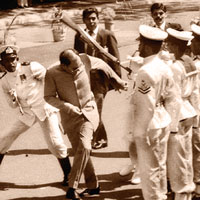
While the Para Commandos lost their way searching for Prabhakaran, the Sikh infantry unit was outgunned and outnumbered. Fighting to the last bullet, six commandos and 29 Sikhs were killed. If absence of aerial support was one factor, inaccurate intelligence on Prabhakaran’s whereabouts was another reason for the failure of the IPKF’s first daring mission. The absence of enough Tamil-speaking personnel in the IPKF had had a telling effect on intelligence gathering. If the operation had been conducted with better planning and resources, it would have been a complete game changer.
Inferior weaponry
In the earlier stages of the war, the LTTE fighter was using better weapons like AK-47, G-3 and M-16, in contrast to the Indian trooper who was using the less effective 7.62 mm Self Loading Rifle (SLR). This made the contest unequal and instilled deep fears in the Indian soldier. Moving in big groups out of fear, they suffered high casualties in ambushes. But when led properly, they should grit. As the war stretched, the IPKF used helicopter gunships and heavier fire, which drove the LTTE into hideouts in the Wanni. But the guerillas’ landmines and snipers continued to claim Indian lives.
Dual track policy
The Indian Government followed a ‘Dual Track’ policy in North-East Sri Lanka. The LTTE alleged in September 1987, that RAW was building up anti-LTTE groups even while being friendly with the LTTE. Das and Dutta-Ray alleged that the secret talks in Chennai between RAW and the LTTE were hindering the IPKF’s operations. But the political establishment in India had its own compulsions as former Cabinet Secretary B.G.Deshmukh pointed out in his book A Cabinet Secretary Looks Back (Harper Collins India, 2004).
According to him, the brief given to the IPKF was to “subdue the LTTE but not to emasculate it to the extent that it would not be able to face the Sri Lankan army alone if it became necessary in the future in case the political situation so developed.”
Endorsing Deshmukh, Avatar Singh Bhasin says in his book India in Sri Lanka: Between Lion and Tigers (Vijitha Yapa, Colombo, 2004): “There was the widely held perception that Prabhakaran was allowed to slip out of the IPKF net thrice.”
Atrocities
The frequent killing of IPKF soldiers by using civilians, including women and children, as cover, led to atrocities against innocent Tamil civilians. University of Jaffna teachers Rajan Hoole, Daya Somasundaram, K.Sritharan and Rajani Thiranagama had recorded many incidents of rape, looting, abduction and wanton destruction and killing, in their book The Broken Palmyra (The Sri Lanka Studies Institute, Claremont, California ,1988).
In the case of wanton killings at the Jaffna hospital on 22 October, 1987, they pointed out that the LTTE had fired from the hospital first, but had run away after doing that. The IPKF indulged in indiscriminate shooting even though there was no return fire.
According to IPKF officers, the soldiers’ tendency to fire indiscriminately stemmed from fear as well as anger. The fear was due to the inability to distinguish between friend and foe, civilian from guerilla, because the guerillas were also in civvies. In some cases, violence was a method of terrorizing the people into submission and make them betray the LTTE.
People would complain to IPKF officers about the atrocities, but according to The Broken Palmyra the officers would indulge in hairsplitting on the evidence and let the guilty off the hook. “It may be said the army is an army, and as armies go, they were no worse. But then, we expected something better from India,” authors said.
Making amends
When the dust of war settled in early 1988, the Indian soldiers became humane. A conscious effort was made to win the hearts and minds of the civilians. But the Jaffna man’s response was lukewarm. “After all, friendship is not something that can be turned on and off like a switch,” the The Broken Palmyra commented. Courtesy: CeylonToday