by Dilrukshi Handunnetti
Removed from Sri Lanka’s onetime largest facility for Internally Displaced Persons (IDPs), the Menik Farm, on Monday (24) and relocated to Seeniyamottai in the Mullaitivu District, these 346 IDPs have little hope of resettling in their place of origin.
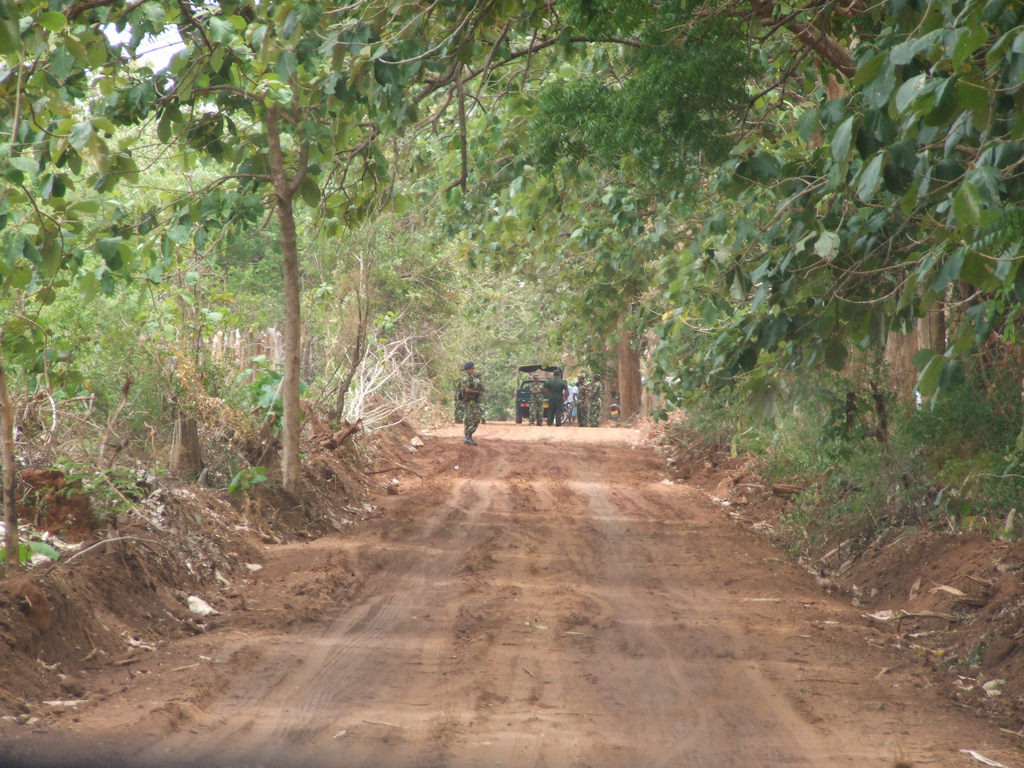
Closest Access This is the closest access ~ From top of the lane which leads to the temporary relocation in Seeniyamottai ~ Photo by Dushiyanthini Kanagasabapthipillai via VikalpaSL
Dilrukshi Handunnetti visited the displaced community in Seenimottai, collectively demanding the restitution of their homes, lands and their right to expeditious resettlement in the places of their origin
In one’s own country, it is possible to become the inquisitive intruder, if information is sought on crucial matters of policy and practice that the authorities may consider ‘unnecessary for journalists.’
Rabble-rousing can be in public interest, but not if power is centralized and the unwritten rule is to withhold information. In Sri Lanka, that being the rule, unearthing information in the interest of Sri Lanka’s war-displaced can prove daunting. Here is the evidence.

The Government has to resettle us in our places of origin. Demand women from Keppaappilavu and Seeniyamottai villages in Mullathivu district. Photo by Dushiyanthini Kanagasabapthipillai.
What is going on in a little-known place named Seeniyamottai in the Mullativu District is a well-guarded secret, with different agencies offering different interpretations. Often, the answer is to declare that they are not authorized to speak to journalists, unless papers are processed through the one powerful agency, Ministry of Defence, permitting officials to speak.
While an expeditious resettlement programme is said to be this government’s badge of post-war honour, read on to find out the holes in a resettlement programme that is said to be ‘coherent, co-ordinated and inclusive,’ according to Minister of Resettlement, Gunaratne Weerakoon, and all others involved.
In Seeniyamottai, there are over 400 families relocated following the closure of Sri Lanka’s largest internment camp, Menik Farm. Given that the road conditions were bad and to avoid undue attention, from Mankulam, it was a jerky three-wheeler ride on a bumpy and muddy road for over three hours. We set off around 9:30 a.m., only to reach the ‘IDP village’ around 12:30 p.m.
Hush-hush operation
There was no expectation of a cordial welcome on our part, but it was made very clear that the new resettlement initiative was to be a hush-hush operation, at least for the time being. We were rudely told that there was nothing for anyone to see inside a welfare camp and we should not be ‘overly curious.’ Facilitated largely by the military, it bore all signs of a camp that is still being set up.
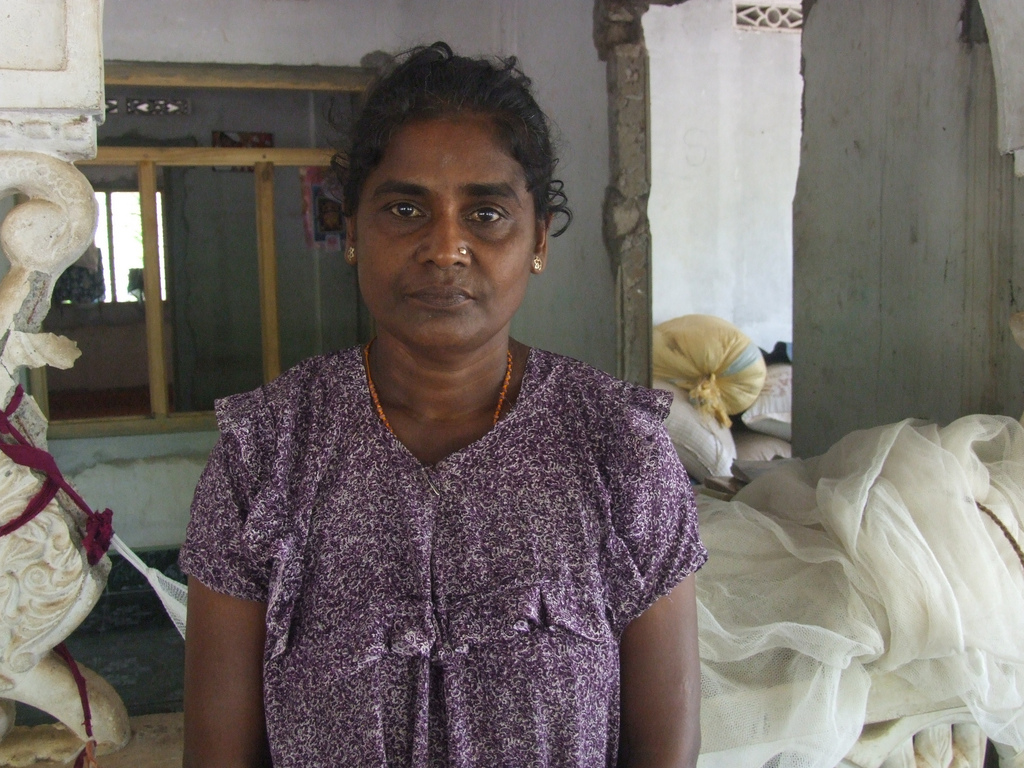
“If people from Mullivaaikkaal and Vattuvaagal can be resettled, why can’t the Government resettle us in the places of origin?” ~ queries Kamaladevi Amirthalingam. Photo by Dushiyanthini Kanagasabapthipillai.
“Go elsewhere. Visit Prabhakaran’s swimming pool. There is nothing for you here,” a junior officer on duty told us. The style of operation, the refusal to share any information, was in contrast to the government’s lofty claims of transparency and accountability in the resettlement process, and to the many assurances offered to us in Colombo that ‘there are no IDPs now. Feel free to visit any place.’
The journey and the information blockade in Seeniyamottai demonstrated that though it is now post-war, resettlement, like many other issues connected to the concluded war, still remained taboo a topic. So, Seeniyamottai saga was not up for discussion.
There was no surprise when we were denied entry into the new ‘welfare’ village. If the relocated are to be believed, there is very little welfare within the site, with no water, electricity or even cooked food being available. Wednesday’s rain caused the IDPs to get drenched in their new-found home, with tents being scarce.
The story of these people differs from all other IDPs’. For what it’s worth, others have been resettled in their places of origin after three years since the war ended. This group left Menik Farm on Monday, with the hope of returning to their original homes.
The small group of 346 was from the village of Keppapilavu in the Mullaitivu District. After three years in a displaced camp, having experienced a protracted war and condemned to a gypsy style of living, the final straw for these people is the snuffing out of their last hope of being able to resettle in their village of origin. Despite the different versions offered by different State agencies, truth be told, they will not be sent back to their original place, ever.
‘Temporary relocation’
They left Menik Farm, amid assurances that theirs will be ‘temporary relocation.’ Given that theirs is a village largely under military occupation, they had little hope of recovering their homes and lands.
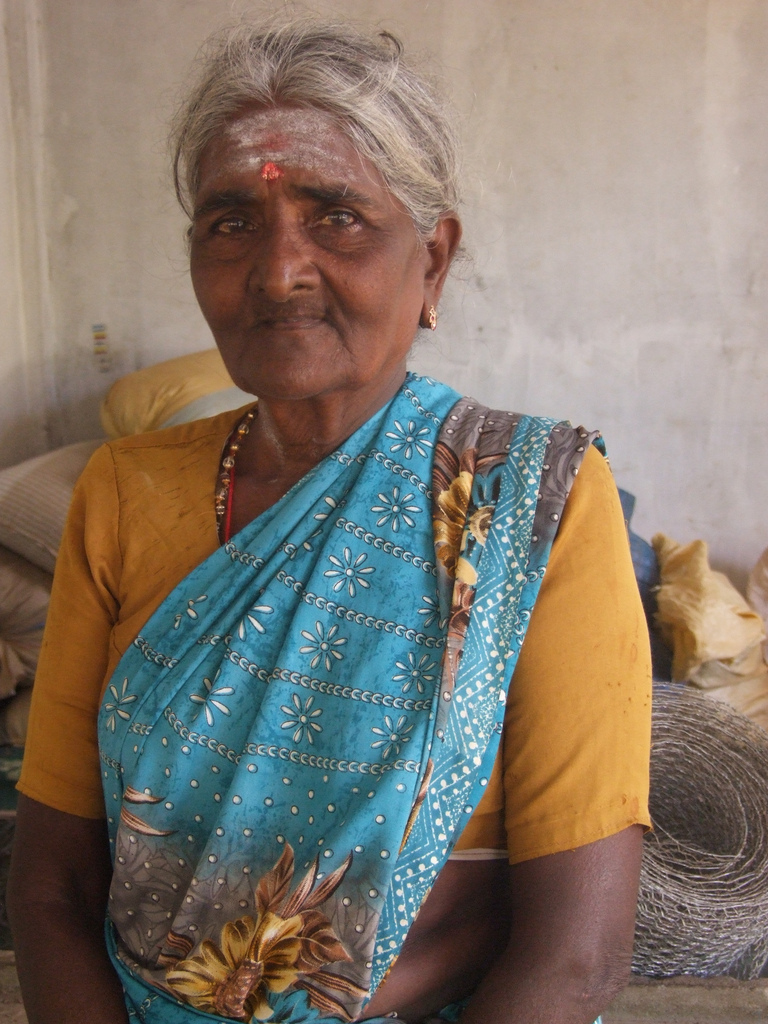
“I don’t want to go anywhere! except to my place of origin Keppaappilavu” ~ shares Saraswathy Kanthapillai while crying and worshipping ~ Photo by Dushiyanthini Kanagasabapthipillai
The IDPs claim that they have been brought to Seeniyamottai ‘against their will’ and ‘under false pretences,’ claims that are rejected by the State. The displaced group took to the streets on 24 September, demanding that they be resettled in their native village, having submitted a petition to the United Nations calling for ‘urgent intervention’ of the international community to facilitate the same.
The resettlement authorities set themselves an ambitious 25 September deadline to resettle all the IDPs living within the 700-hectare Menik Farm located in the District of Vavuniya. The final batch of returnees comprised 1,185 persons (405 families) out of which 346 persons (110 families) were from the village of Keppapulavu.
We met Sivaguru Angaramuttu Udalayakumari (43), one of the IDPs relocated from Kadirgamam, a camp located within Zone 1 of Menik Farm, after we were given marching orders by the personnel on duty outside the camp. She was visibly angry and said that the IDPs were transported in buses against their will, with the promise of resettlement in the place of their origin.
“When officials arrived on Tuesday, people started to weep. We all wanted to know why we were brought to Seeniyamottai. Some have their homes in Keppapilavu.
I am from here, and I have to live inside a camp, all because my home is not been given back to me by the military. My home is occupied by a military cook, and I curse him every day for not giving me my home. We were told we can go back to our homes when things are more settled there, but we have no faith,” she said.
The IDPs who are from Keppapilavu and Mandavil were the last to leave Menik Farm. People from Mandavil were resettled but the other group was brought, ‘crying and protesting, in busloads’ to Vattrapplai Maha Vidyalaya in Mullaitivu for a day. The school was functioning at that time.
“When we arrived, we were told to move somewhere else. A day after we were promised resettlement, we were again displaced, turned out by an officer. We thought we were being taken to our villages, but we have been relocated without any clear undertaking as to when we will be resettled in our own village,” added she.
Having left the school, where the IDPs staged their protest, they were next brought to the nearby village of Seeniyamottai where a coppice is now being cleared for the new settlement.
Udayakumari’s sister, Manoharan Suriyakumari (41) left Menik Farm in 2010 to live with a host family in Seeniyamottai. Angry about not being able to return home, she showed us title deeds to her property and wistfully said, “I won’t get my home back in this lifetime.
Please help us. We had a much better life before the war and before displacement. We had dignity,” she said.
Living with host families
Suriyakumari is condemned to live with a host family just a few metres away from her own home. “My plight is shared by many. Our homes and lands are occupied by the military. From the camp, my sister can see her own home.
These other people sharing this home have the same issue. They may tell otherwise to you, but we have never been compensated for the properties they continue to occupy. There are no signs of them leaving our homes. This is why we are not being relocated,” she insisted.
“The world is being told an untruth about us being resettled. We have been relocated against our will and will never be resettled in the places of our origin,” added Udayakumari, who lost her daughter Ambika to an aerial attack.
The displaced also have other complaints about the new IDP facility. At present, displaced persons from four villages in the Mullaitivu District have been relocated to the Seeniyamottai village for the displaced. Over 400 families from Seeniyamottai, Suriyapuram, Pilakudirippu and Keppapilavu now live there.
Within the site, despite being set up three days ago, there are no basic facilities for the people. IDPs said that this was ‘the worst camp’ they have been to, and many of them can recall the IDP experience at different camps. Some of them have suffered multiple displacements due to the war, coupled with natural disasters. “Our lives are an ongoing tragedy,” said Suriyakumari.
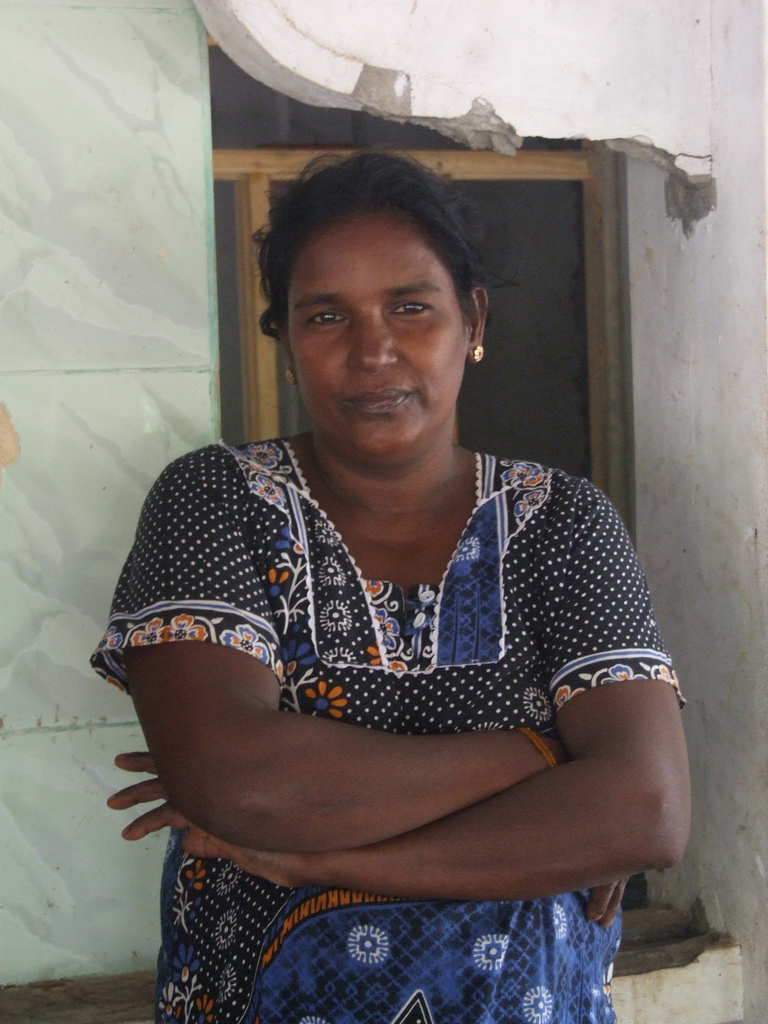
“How long are we going to lead an IDP life” ~ queries Sarojadevi Nimaleswaran ~ Photo by Dushiyanthini Kanagasabapthipillai.
Seeniyamottai, at present, does not have toilet facilities, water supply or electricity. The IDPs, since their arrival, have not been able to take a shower or to cook. “We have been just brought here. There are no facilities whatsoever.
Food supplies were stopped on Tuesday night and we were expected to cook. It rained that night and our firewood got wet. We had no cooked food on offer and are now without meals nearly a day,” said Udayakumari.
Though she attempted to cook for her family of two children and husband, there are some others who have not received the dry rations distributed by the government through the military. “Some people are here with just their clothes and no other earthly possessions whatsoever,” she added.
Kanapathipillai Ragudasan, a 42-year- old farmer, was rushing to visit his parents, who had just arrived at the Seeniyamottai IDP village when we met him. He was unsure how his aged parents, Velupillai Kanapathipillai (72) and Manomani Kanapathipillai (62) were to finding their new home.
“There is no chance of the people in this IDP village returning to their original places. To do that, the lands and homes should be returned. The war is over, but nothing has changed in our lives,” he said.
Another returnee from Menik Farm, Kanthapillai Sarasvati (67) also lives with a host family in close proximity to the Seeniyamottai IDP village.
“We have given up hope about resettlement. What resettlement when we are not allowed access to our homes that are occupied by the military?” she questioned, accusing the authorities of non-action with regard to property restitution. “How would you feel that for years, others continued to live in your home while you live in a camp for the displaced,” she asked.
Hand-to-mouth existence
Chandra Sivaguru (60) is a woman of gentle demeanour. Widowed in 1990, her husband was killed in a shell attack that claimed several other lives in her native village. She too lived in Menik Farm until recently and has now come to live with a host family.
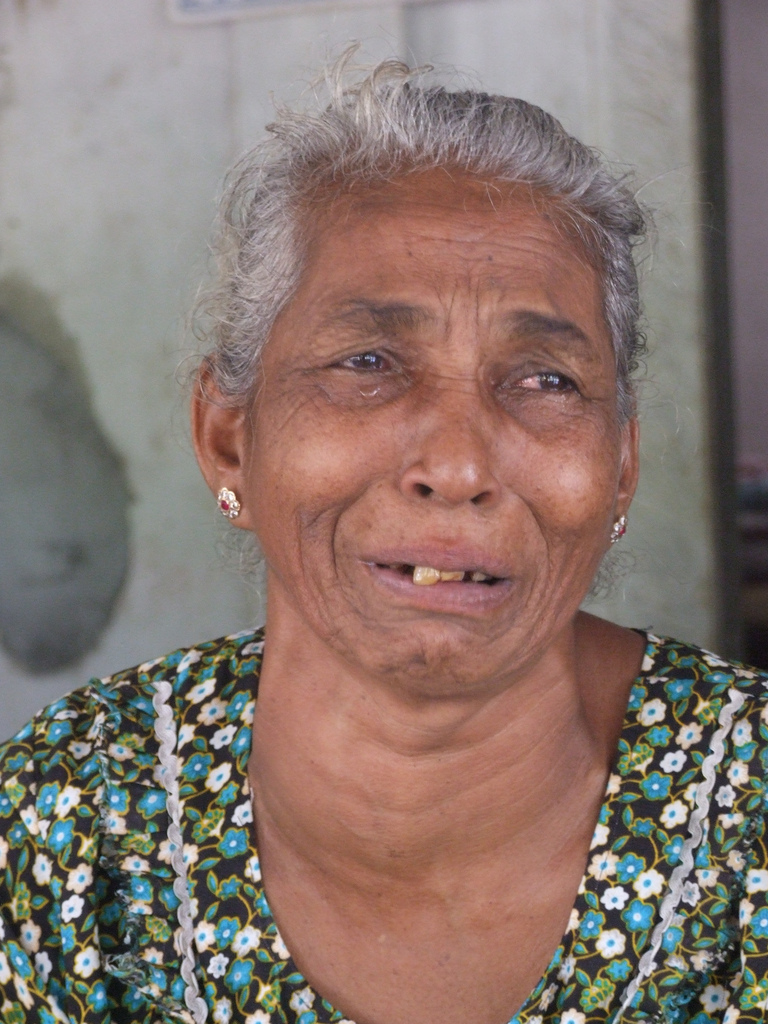
“I have a lot of properties in Keppaappilavu, which are currently occupied by the military” ~ Chandra Sivaguru ~ Photo by Dushiyanthini Kanagasabapthipillai.
“We were prosperous at one point of time. We had lands, we owned cattle, and we had a steady income and were in a position to look after others in the village. Now we lead a hand-to-mouth existence,” she said wiping her tears.
Her daughter too was widowed in 2009 in similar fashion. “There was an aerial attack. He had a home garden and was at work. Our lives have been destroyed, our family members killed and our livelihood options devastated. We are only asking for our homes. Instead of transferring us from place to place in this manner, they should shoot us and kill us. Death is merciful than this life without dignity,” she said.
The devastated displaced group from Keppapilavu made three demands at the protest held on 24 September. They wanted first, to be resettled in their original places. They also wanted their homes and lands to be returned in order to lead normal lives hereafter. But for them to move on, justice had to be meted out, and this meant, they wanted trials to be concluded fast and justice for those who disappeared.
While the IDPs from Keppapilavu were demanding that their rights to property and human dignity be respected, a spokesperson for the Ministry of Resettlement yesterday insisted that they would be resettled in their places of origin, but refrained from stating a possible deadline. On the other hand, Government Agent for Mullaitivu, Nagalingam Vedanayagan, was quite clear that there would not be any further resettlement of these 346 IDPs. Seeniyamottai is to be their permanent home.
On 25 September, the United Nations Humanitarian Co-coordinator in Sri Lanka, Subinay Nandy, in a statement drew attention to the plight of these displaced persons and called for a meaningful closure to the ‘chapter of displacement in Sri Lanka.’
The statement said: “The UN is concerned about the 346 people (110 families) who are returning from Menik Farm to Keppapilavu in Mullaitivu District, who are unable to return to their homes which are occupied by the military.
Instead, they are being relocated to State lands where they await formal confirmation about what is happening to their land in the future, and plans for compensation, if they cannot return.”
Drawing attention to the post-war reconciliation and the return to normalcy, Nandy added, “Allowing people to settle anywhere in the country and resolving legal ownership of land for those who have resettled away from their original homes is a key part of the reconciliation process.”
But for these 346 persons, their only dream of living in their village and tilling their own gardens cannot become a reality. They are here to stay in Seeniyamottai, but the tragedy is though they suspect it, they are yet to be told.
This is their permanent home – GA Mullaitivu
Seeniyamottai site is currently being developed as a permanent IDP village and those relocated on Monday will be provided permanent residence there, Government Agent for Mullaitivu District, Nagalingam Vedanayagam told Ceylon Today.
He said the government has decided to provide permanent residential facility to the IDPs. “It is not possible to resettle them in Keppapilavu. It was a former camp area. Instead of that, they will be resettled here and the government will assist in constructing their homes and other infrastructure facilities. Through a new process, their properties elsewhere will be acquired or compensated for and new deeds will be issued soon,” he said.
Resettled according to instructions – GA Vavuniya
In closing the Menik Farm IDP facility, the final batch comprising 1,185 persons, was transferred on 24 September. Barring the few permanent structures, all temporary structures were removed by 26 September and the land will soon be handed over to the owners, said Vavuniya Government Agent, Bandula Harischandra.
He said: “I have resettled people according to instructions received. The IDP resettlement programme is an integrated and collaborative effort executed by multiple government and international agencies. The final batch of IDPs was sent to Mullaitivu and nobody from that group was resettled in Vavuniya. It is now a matter for Mullaitivu.”
No access, intimidation only
The resettlement of the war displaced, according to the State and its various spokespersons, is a process that is transparent and systematic. With resettlement in full swing in the past few months, the Ceylon Today team was repeatedly informed that access was not restricted.
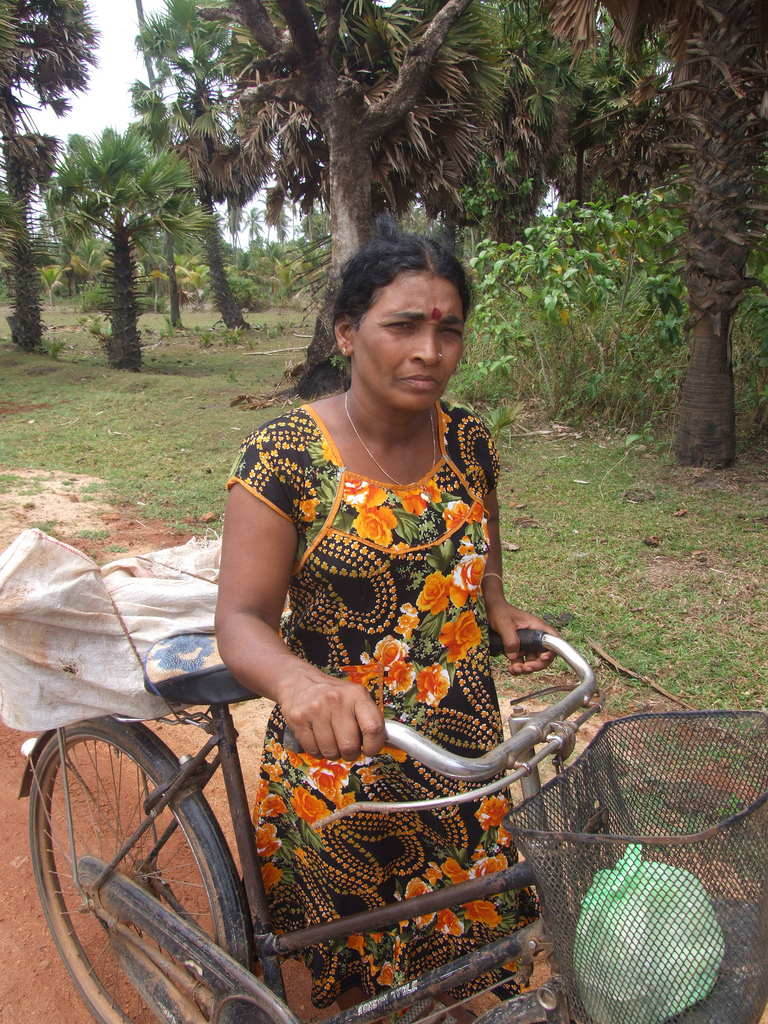
“Why did the Government force us to leave Menik farm, if they can’t resettle us in our places of origin?” ~ queries Uthayakumari Ingaramuthu Sivaguru with anger and tears ~ Photo by Dushiyanthini Kanagasabapthipillai
These assurances became meaningless when we reached Seeniyamottai, the place where over 400 IDP families were relocated to. Only some will be finally resettled in their native places.
At the turn off to the Seeniyamottai IDP facility, there was heavy military presence. When asked whether we could at least drive past the camp, there were curt orders to ‘quickly turn back and go.’
One junior officer demanded to know whether we ‘heard of something,’ the reason for our visit. “Did you hear about resettlement? People have just come here. There is nothing for you to see there. It is a matter for the State,” he insisted.
Another, gun in hand, informed that there were more adventurous things to do in Mullaitivu than visiting IDP camps. He was full of appreciation for the continued war tourism that brings in hundreds of people from the South to the North. “Have you seen Prabhakaran’s swimming pool? Why not visit his bunker? Go in that direction. If you have family and friends, go with them, but don’t come to the IDP village,” he said.
The two men appeared clearly suspicious of two women travelling in a three-wheeler and repeatedly wanted to know what we were carrying in our handbags. Then they promptly ordered us to leave, insisting, “There is nothing here for you,” querying, “Did anyone tell you anything about resettlement?” clearly indicating, the resettlement, or in this case temporary relocation, was not up for discussion.
War tourism is one thing, but citizens or journalists wanting to know about IDP resettlement was quite another matter.
The paranoia about information reaching journalists and the people in general appeared to petrify those who were involved in the programme in Seeniyamottai.
After several interviews were conducted with IDPs living with host families and some, within the newly set up Seeniyamottai IDP village, two men demanded to know why we were so inquisitive about the ‘programme.’
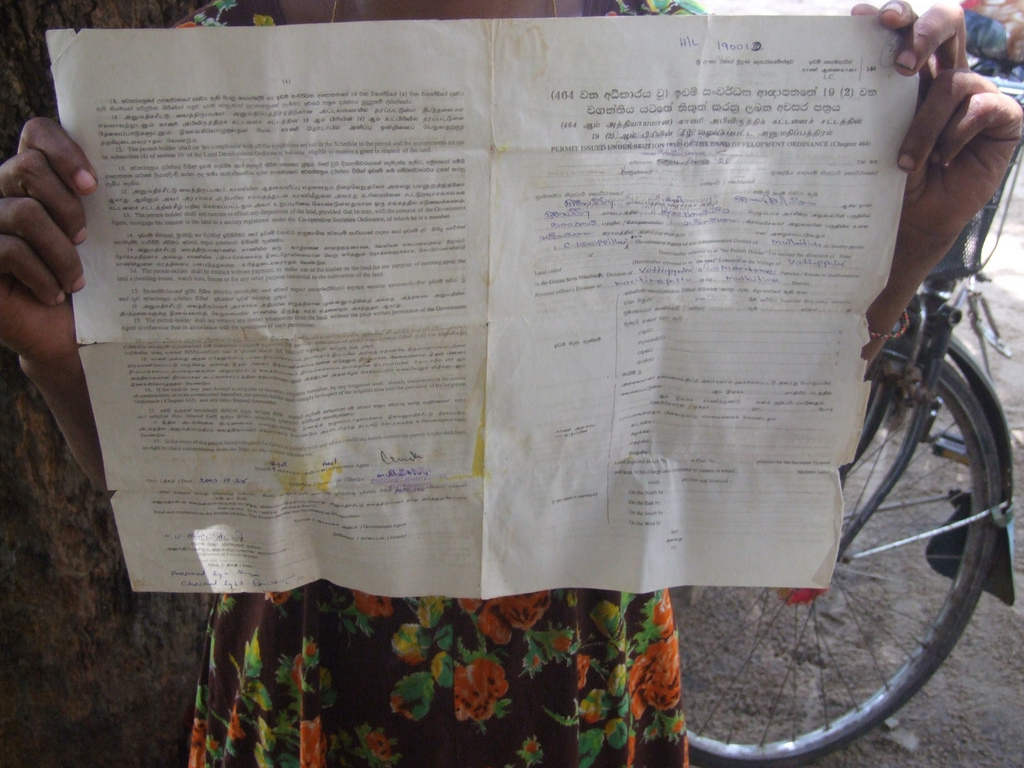
An IDP shows the deed to her land and house in Seeniyamottai. The property is currently occupied by the military ~ Photo by Dushiyanthini Kanagasabapthipillai.
One man who, according to the IDPs, was a Rural Development Officer (RDO) continuously fired questions at us about the purpose of our visit. He kept turning back and addressing another man as “sir,” according to the IDPs, a CID officer who did not establish his identity though demanded to know our own. While the journalists were being grilled this way, four others reached the three-wheeler and demanded to know why we were in Seeniyamottai, what interest we had of the IDPs, why he was driving us and how and from where he got the taxi hire.
The supposed RDO insisted that people have come to the new settlement willingly and were not forced. “These people were not forced out of Menik Farm. They all came willingly, saying that they did not want to live there. They dropped at President Rajapaksa’s feet literally and begged for their release. Don’t come and create trouble. If you do, we will pour some kerosene on the IDPs and destroy the entire village. It will all be your fault,” he said, delivering an unveiled threat.
The IDPs who spoke to us had evening visits from various officials, who wanted to know who we were, what we wanted to know, whether photographs were taken and about the responses offered. Many were interested in finding out whether the journalists were from foreign news agencies or local.
From Seeniyamottai to Muliyawalai, a man riding a motorbike followed the three-wheeler at a distance. At the Muliyawalai check point, two in uniform and one in civvies, crossed the road and stopped the three-wheeler. First the driver’s licence was demanded and rapid questions followed in Tamil. After a while, the driver was sent back to the vehicle and was asked to bring our National Identity Cards (NICs).
When we got off the vehicle and took out our NICs with passports and declared ourselves as journalists, they said, “It was routine to record information of people who are not from the area.”
Information was recorded on a normal exercise book by the man in civvies in Sinhala, but was asking questions in Tamil. When we asked as to who he was and whether he was from the Army and why he did not write on a log book, a soldier in uniform said, “He is with us.
Because of Tamil fluency, he is assisting us.” Next he asked, “Why do you ask?” and when we insisted that we had a right to know as to who and for what purpose our information was recorded in a country which is now declared free, that too without establishing his identity, we were told “such things are regular.”
Need to restore rights of IDPs
President of the Colombo-based Civil Monitoring Commission, activist and politician Mano Ganesan, told Ceylon Today that a group of IDPs who are now in Mullaitivu, needed to be resettled in their native places, on their land and in their homes.
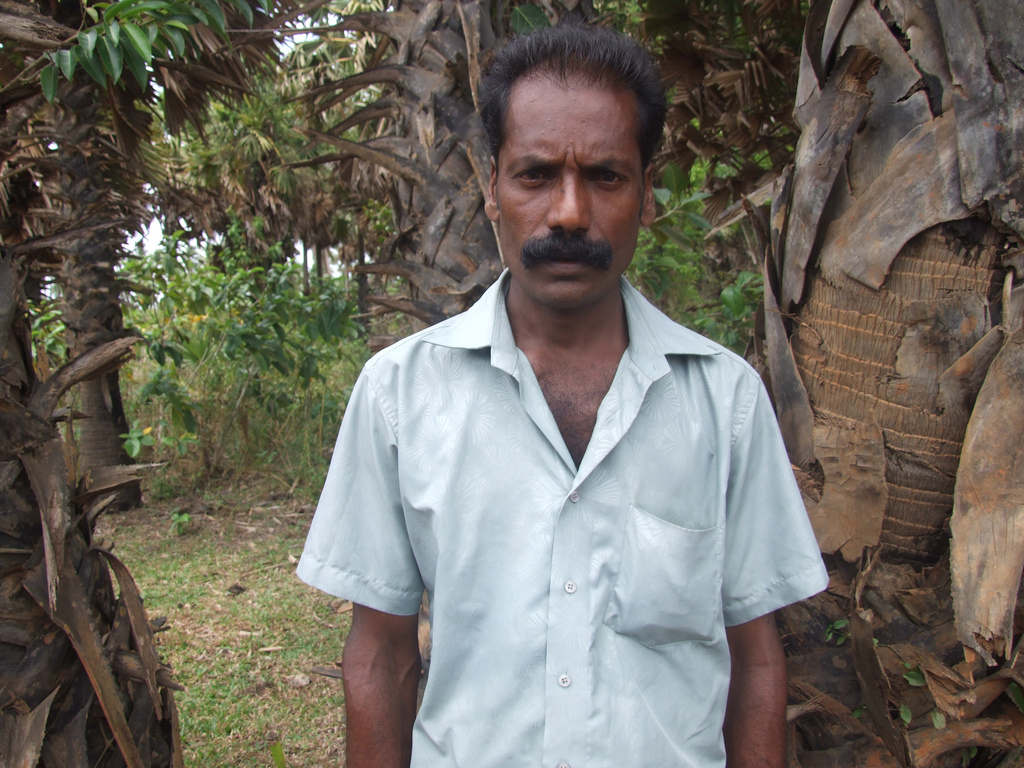
“It’s been our fate for nearly 30 years of being an IDP” ~ Kanapathipillai Raguthasan ~ Photo by Dushiyanthini Kanagasabapthipillai
“For years they have been going from place to place. They have lost their properties and their dignity. It’s been three years since the war concluded. Everywhere else, people have been resettled in places of their origin. This problem needs to be addressed. After all these years, they need not relocate, go from place to place, indefinitely. They must return home,” Ganesan insisted. Courtesy: Ceylon Today