By
D.B.S.Jeyaraj
This is a period of time in Sri Lanka which is referred to as “Ashraff season” in lighter vein by observers of the Sri Lankan Muslim political scene. The Country witnesses a series of meetings and events paying tribute to the late Muslim Congress leader MHM Ashraff during this period. From the date of his death September 16th to the date of his birth October 23rd this season of more than five weeks would result in Ashraff being commemorated by Muslim political leaders notably those of the Sri Lanka Muslim Congress.

M. H. M. Ashraff (23 October 1948-16 September 2000)
The current season too has begun with several Ashraff commemorative meetings. Cabinet minister for productivity promotion and Batticalo district Muslim Congress MP Basheer Segu Dawood was chief participant at a meeting in Ashraff’s honour at Eravoor. Former Kalmunai Mayor and SLMC parliamentarian from Amparai district H.M.M. Harees organized a commemorative meeting for Ashraff in Kalmunai. More meetings at multiple levels are expected to occur in the coming days.
Speaker after speaker will be singing paeans of praise about the departed leader Ashraff in these events.A significantly recurring theme in these meetings will be the lament about lack of political unity among Muslims.It will be noted that the unity forged by Ashraff through the Muslim Congress is now fragmented. It will be pointed out that such unity is essential at the present juncture where Muslims are facing a precarious predicament. It will be emphasised that had Ashraff been alive such a situation would not have arisen.
Sri Lanka Muslim Congress leader and Cabinet minister of Justice Rauff Hakeem issued a special statement on Sep 16th the 14th death anniversary of his departed leader and predecessor. In that statement issued in Tamil, Hakeem invoked Ashraff’s memory and called upon the “Muslims of this country to unite as one entity”. Stressing that the unity of Muslims is essential and inevitable at this point of time, Hakeen appealed to the Muslims to unite and continue journeying in the path laid out by Ashraff towards the goal of uplifting the community.
“Kizhakku Maahaanam”
It is indeed surprising that even after 14 years of his death, the memory of Ashraff and the impact of his legacy continue to exert significant influence over the politics of Sri Lankan Muslims in general and the Muslim Congress in particular. It is a given that any Muslim politician in the east who wants to avoid loss of popularity, retain popularity or gain more popularity must always praise the magic name of Ashraff. No one dares to be politically critical of Ashraff in the “Kizhakku Maahaanam”(Eastern province)for fear of being politically ostracised.
What then is the reason for the prevailing political mystique of “Marhoom” MHM Ashraff? Who was this man who became leader of a revived Sri Lanka Muslim Congress in 1986 with a clear political vision and embarked upon a zealous mission for his people? What did he achieve in 14 years that endeared him to the Eastern Muslims so much that they greatly respect his memory even after 14 years of his demise? Relying to a great extent on some of my earlier writings I shall strive to answer these questions to some extent at least while simultaneously sketching a brief outline of the evolution of the Muslim Congress and a political profile of its legendary leader.
Muhammed Hussain Mohammed(MHM) Ashraff was a pioneering political leader of Sri Lankan Muslims in general and the Eastern Muslims in particular. Ashraff was far ahead of his times in more ways than one. It was he who first realised the vast untapped political potential of the Muslim community and strove to charter a course that would have enabled them to have their grievances redressed and aspirations fulfilled. At a time when the conflict within the island was perceived in simplistic terms as a “Sinhala versus Tamil” issue, the efforts of Ashraff brought to the fore the specific problems faced by Muslims. It was the eloquent and effective advocacy of the Muslim cause by Ashraff which led to the general awareness that the seemingly intractable ethnic crisis was not merely a Sinhala-Tamil bilateral issue but a trilateral one involving Muslims too.
The Muslims of Sri Lanka, also known as Moors, have a unique ethnic identity. Constituting more than 9% per cent of the island’s population, they are distributed somewhat evenly with about two-thirds in the seven predominantly Sinhala provinces and the rest in the Tamil majority Northern and Eastern provinces.The bulk of the community including sections living amidst the Sinhala population speaks Tamil at home and are classified as Tamil speaking. The medium of instruction in most Muslim schools is chiefly Tamil. The community has also thrown up a number of Tamil scholars, writers, poets, journalists and artists who have reached eminent positions.
Ethno-Religious
In spite of this, the community does not subscribe to being “Tamil” but perceives itself as “Muslim”. The Muslim self-perception is based on ethno-religious and not ethno-linguistic lines. This socio-cultural reality has acquired sharp political dimensions in recent times.

M.H.M. Ashraff
Although they are a scattered population, Sri Lankan Muslims have their single largest concentration in the Eastern Province where they form more than one-third of the total population. A large number of Muslims of the Batticaloa-Amparai districts live interspersed among Tamil villages along the littoral areas known as “Eluvaankarai” (Shore of the Rising Sun). The hinterland to the west of Batticaloa lagoon known as “Paduvaankarai” (Shore of the Setting Sun) is predominantly Tamil.
Substantial numbers of the Eastern Muslims are farmers and fisherfolk. The East consisting of Muslim“ enclaves” with concentrations of Muslim votes has helped the Eastern Province Muslims to elect at least four to six parliamentarians from the Province at each election. The Eastern “bloc” has at times constituted almost 50 per cent of the total Muslim representation in Parliament.
Despite this advantage, the overall leadership of the community was not in the hands of the Eastern Muslim. The comparatively advanced Muslim leaders from the Central, Western and Southern provinces were in charge, lording it over the Muslims from the Eastern backwaters. All this, however, changed with the advent of Ashraff.
Ashraff was born on October 23, 1948 in the Muslim village of Sammanthurai in Amparai district. He grew up in the town of Kalmunai, in the same region. After schooling in Kalmunai, Ashraff entered Law College where he passed the examination with first class honours. Ashraff went on to acquire a bachelor’s and later a Master’s degree in Law from Colombo University. The latter feat was achieved in 1995 when he was a Cabinet Minister. He took silk in 1997 as President’s Counsel.
Wesley High School
Though an uncompromising Muslim nationalist in later years, Ashraff was always close to the Tamil language and its ethos. As an old student of Wesley High School in Kalmunai and as a law student he moved closely with Tamils. Despite the vagaries of politics he retained his personal friendships with Tamil classmates and colleagues. He was also well – versed in the Tamil language and literature.
Ashraff was a fiery orator in Tamil. Moreover he was also a poet who used “Thamizh” as the vehicle of his thoughts. He has published volumes of poetry.Very few of the present crop of Tamil and Muslim parliamentarians read poetry let alone compose poems.

S.J.V. Chelvanayagam
Ashraff began his political career like many an Eastern Muslim leader as an admirer of the Tamil father figure S.J.V. Chelvanayagam, the founder leader of the Federal Party. He was greatly enamoured of Chelvanayagam and the federalist vision for the Tamil speaking people of the North – Eastern Traditional Tamil homelands. Ashraff was particularly appreciative of the fact that it was Chelvanayagam who raised the issue of Muslims being killed at the Puttalam mosque by policemen in 1976.Ashraff spoke on F.P. platforms and in 1976 attended the historic Vaddukkoddai Conference where the newly formed Tamil United Liberation Front (TULF) unanimously adopted the demand for a separate state of Tamil Eelam.
I first met Ashraff in 1977 when he was campaigning ardently for Tamil Eelam on the TULF platform. He had formed the Muslim United Front and signed an agreement with Appapillai Amirthalingam. Muslim candidates were fielded on the TULF Sun symbol in Kalmunai, Sammanthurai, Puttalam and Mutur. Another assigned to contest Seruwila failed to submit nomination papers at the last minute.
Ashraff himself did not contest but actively campaigned in 1977.This was the time when Ashraff stated publicly that even if elder brother Amirthalingam could not deliver Tamil Eelam younger brother Ashraff would do so. The highlight of Ashraff’s speeches then was this bombastic pronouncement that even if Amirthalingam himself abandoned the goal of Eelam, Ashraff would continue to strive for it.
Tamil Eelam
In spite of this affinity towards Tamil Eelam on the part of Ashraff, the Eastern Muslim voters had different ideas and rejected the MUF candidates on the TULF ticket. This was an eye – opener to Ashraff. The electoral results showed that despite Ashraffs desire to share a Tamil – Muslim political vision, Eastern Muslims had other ideas. While the Tamil candidates of the TULF swept the polls, no Muslim from the party won a seat in the polls.
Ashraffs relations with the TULF became strained gradually. The 1981 District Development Council elections saw the TULF going to polls on a Tamil slate of candidates. Ashraff wanted Muslims to be included in Mannar and the three Eastern districts . He was rebuffed. This led to an already estranged Ashraff parting ways with the TULF completely.
However this did not result in him joining a “Sinhala dominated”national party like other Muslim leaders of old who cut their political teeth in the FP and then merrily crossed over. Ashraff realised that the Muslims needed to charter a separate course independent of Tamil and Sinhala politics. This led to his aligning with Ahammed Lebbe of Kattankudi and co – founding the Muslim Congress. After Ashraff parted ways with the TULF the MUF had entered a state of decay. The SLMC was inaugurated on September 21, 1981. At that point, the SLMC was more or less an Eastern outfit concerned more with socio-cultural than political issues.
The July 1983 anti-Tamil pogrom and the consequent escalation of armed Tamil militancy with Indian backing led to a situation then where the possibility of Tamil Eelam began looming large on the political horizon. The Eastern Muslims became increasingly insecure and apprehensive of their future in a “Tamil Eelam” state.
On the other hand, the contemptuous manner in which the J.R. Jayewardene regime dismissed the Muslim opposition to the resumption of diplomatic relations with Israel touched a raw nerve in the community. Ashraff was instrumental in organising protest demonstrations over the issue. However, Sri Lankan Muslims at that point of time were immune from the global trend of growing Islamic consciousness and radicalism.
Political Insecurity
The Muslim community in the East also produced a new generation of educated and ambitious youth with huge aspirations. All this created a suitable climate for Ashraff and his brand of politics to arrive on the national scene. The rise of Tamil armed militancy instilled a sense of political insecurity and urgency into Muslim politics.
The catalyst was the outbreak of violence between Tamils and Muslims in the Kalmunai-Karaitheevu areas in 1985 which was aided and abetted by agents of the state and Tamil militant groups. The Kalmunai – Karaitheevu Tamil – Muslim violence of 1985 affected Ashraff directly. Threatened by and fearing harm at the hands of Tamil militants, Ashraff was forced to flee to Colombo.
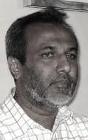
Rauff Hakeem
Ashraff moving to Colombo as a “political refugee” was a significant milestone in his life. He was provided help by concerned Muslims including the well-known lawyer Faiz Musthapha. It was at Mustapha’s chambers that Rauff Hakeem interacted with Ashraff and became a devoted disciple.
In the nation’s capital, Ashraff’s political horizons began to extend beyond the East. He recognized the widespread disappointment prevalent among the Muslim masses with their elitist leaders. Ashraff identified the need and yearning of the community to assert boldly and articulate their identity. Ashraff was disgusted with the politics of Muslim leaders in the UNP and SLFP. He felt that these people were nothing but minions serving their “Sinhala political masters” without evincing real concern for the Muslim plight. One reason for this Ashraff felt, was the lure of power and the attraction posed by the spoils of office. An Independent voice was necessary. For this concrete Muslim unity was needed.
Muslim Congress
Establishing himself firmly in Colombo Ashraff, revived and restructured the Muslim Congress. In 1986 he convened an Island – wide convention in“Punchi” Borella and formally took over party leadership after gently easing out Ahamed Lebbe.I was a witness to this eventful moment in the history of the Muslim Congress. I attended the convention in a journalistic capacity along with my departed friend and colleague MPM Azhar of the “Virakesari” who later edited the “Navamani” Muslim weekly. There was magic in the air as the Muslim delegates took their decisive step on a long journey that continues to date.
I was in close contact with Ashraff during the 1986 – 88 period. It was then that I saw him at close quarters forging a new vision and mission for his people. Some of his ideals seemed impossible to achieve then. Ashraff wanted the Muslims to be recognized as a separate and equal entity on par with the Sinhala and Tamil people.The Muslim people in all parts of the Country needed their own independent political party. The SLMC was to fulfil that role. The party was to remain independent of Sinhala and Tamil political overlordship. He described both as two “Saithans” (Satans) then. The Eastern Province Muslims were to play a greater role in this project. By doing so, this often neglected people were to achieve their rightful place under the Lankan sun.
Ashraff also introduced the demand for a territorially non – contiguous North – Eastern Council for the Muslims on the Pondicherry model of India. His aim then was to create a Muslim majority council linking up all Muslim majority AGA divisions in the North – East. Ashraff gradually redefined the objectives and redrafted the constitution of the Muslim Congress to make it an all-island party. It was formally accredited by the Election Commissioner and allocated the symbol of the tree on February 11, 1988. The “new” SLMC under Ashraff contested the Provincial Councils in 1988. It won 17 seats in the North – Eastern council and 12 in the Western, North-Western, Central and Southern Provincial councils. The proportionate representation system helped the fledgling party to record an impressive showing in the provincial council elections. The Muslim Congress had come of age.
Although he was not happy with the India-Sri Lanka Agreement of July 1987 which he felt neglected the Muslim viewpoint, Ashraff supported its provisions. The Muslim Congress participated in the North-East provincial council elections of 1988 and became the chief Opposition party there to the administration headed by Annamalai Varatharajapperumal.
Parliamentary Polls
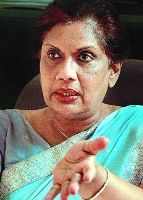
Chandrika Kumaratunga
The SLMC also supported the victor, Ranasinghe Premadasa, in the 1988 presidential elections. In 1989 the Muslim Congress contested the parliamentary polls independently and won four seats. Ashraff himself was returned in Amparai district with a massive number of preference votes. The SLMC discovered that in spite of its all-island appeal the four parliamentary seats it was able to garner were from the North-East alone.
Ashraff realised that if the party was to maximise its representation, tactical compromises would have to be made and strategic alliances with major parties formed. In 1994 he did just that in the accord with Chandrika Kumaratunga’s People’s Alliance. Ashraff took a cue from Saumiyamoorthy Thondaman whom he greatly admired and entered a pre – poll agreement with Kumaratunga. Ashraffs strategy like Thondaman was to enter into electoral agreements and enhance representation for his people.

Saumiyamoorthy Thondaman
1994 saw the SLMC get six elected and two national list seats. The SLMC contested under its own symbol in the North-East and on the P.A. ticket in the other provinces.The SLMC played a constructive “Queen maker” role to install the Chandrika Kumaratunga government in a hung Parliament. Ashraff became Minister for Ports, Shipping and Rehabilitation. Later he lost shipping in a reshuffle. Two other SLMC members, Hizbulla and Aboobakr, became Deputy Ministers.
SLMC general secretary Rauff Hakeem became Chairman of committees. Ashraff’s ministerial tenure was eventful and controversial. He was accused of providing Muslims jobs on a massive scale in the various harbours coming under his purview. Colombo, Trincomalee and Galle were cited as examples. Ashraff was also faulted for giving priority to Muslim areas in the matter of rehabilitation and Development projects. The harbour at Oluvil was an enduring and endearing dream for Ashraff.
Ashraff has been accused by critics of being autocratic in his handling of party affairs. He was the supreme “Thalaiver” and brooked no nonsense from within. At the time of his death, he had suspended the party membership of three MPs and sent a show-cause notice to another.
Muslim Majority Council
Apart from the charismatic sway Ashraff had over the Muslim masses, his strength was his adaptive flexibility . The SLMC’s fundamental demand had been for the creation of a territorially non-contiguous Muslim majority council consisting of the Muslim divisions in the North and East. The inspiration for the territorial non-contiguity principle was the Indian model for the Union Territory of Pondichery. There the regions of Pondichery, Karaikal, Yanam and Mahe though far apart geographically came under a single administrative system.
When he found the demand for a territorially non – contiguous unit unachievable, Ashraff substituted it for the South Eastern Provincial Council comprising the territorially contiguous electoral divisions of Sammanthurai, Pottuvil and Kalmunai.He was also willing to support a merger of Batticaloa and Trincomalee districts with the Northern Province. Ashraff was prepared to give that up too if it became necessary and opt instead for a merged North-East with adequate safeguards for Muslims including a de-merger proviso by referendum in 10 years’s time.
Ashraff also wanted to carve out a distinctly Muslim –majority coastal district known as Kalmunai out of the existing Amparai district. He was however hesitant in some respects because he feared the contemplated littoral district could be deprived of adequate land and water resources.
While being firm on Muslim interests Ashraff was always ready to work together with Tamils. There are few Eastern Muslim politicos on the same wavelength as that of Ashraff on this aspect. Naturally, the interests of his own community were paramount for him but Ashraff was also extremely sympathetic to the Tamil problems and grievances. Except where the interests of Tamils and Muslims clashed directly, he tried to help realise the legitimate aspirations of Tamils.
Tamil and Tamils
Ashraff had to clash with Tamil politicians in later years in the interests of his community. This was inevitable. But unlike many of the current crop of Muslim politicians from the East, Ashraff had an empathy with Tamil and Tamils. He understood Tamil grievances and appreciated their aspirations. Ashraff was a person who felt that the fundamental problem in Sri Lanka was Sinhala majoritarianism and that some understanding among minority communities was necessary to combat it.
Ashraff’s greatest virtue was perhaps his metamorphosis from a “sectarian” leader to a “national” one. By 2000 his horizons broadened and Ashraff formed the National Unity Alliance (NUA). Ashraff was now prepared to look beyond Muslim ethnicity and reach out to other communities. He had a blueprint for achieving lasting peace by 2012.
The NUA’s birth indicated that the one-time “Tamil Eelamist” supporter who pioneered an exclusive party for Muslims had reached an evolutionary stage where his outlook was blossoming into a broader Sri Lankan nationalist perspective. While the SLMC was to be the flagship of the Muslims the NUA was to be wider and inclusive representing all communities.
One does not know what the future may have been of the SLMC and NUA, had Ashraff lived to implement his vision. Sadly Ashraff died a few weeks before the scheduled poll on October 10th 2000. Ashraff’s life being snuffed out at a critical state was a setback to the limitless possibilities offered by the grand alliance at that juncture.
On September 16th 2000 Ashraff was flew aboard an MI-17 helicopter of the Sri Lanka Air Force above the Urakanda mountain range in the Aranayaka area in Kegalle district of Sabaragamuwa province. The copter crashed resulting in the death of this dynamic political leader . Along with Ashraff were killed 14 others including crew members, security personnel, personal staff and political supporters.
Rauff Hakeem

Ms. Ferial Ashraff
Ashraff’s loss was keenly felt by country and community. The sense of loss was compounded further by the sorry state of post – Ashraff Muslim politics. The party he breathed new life into underwent dissension.His widow and erstwhile deputies fought for his mantle. His political legacy got fragmented. Ashraffs successor Rauff Hakeem and his widow Ferial split the party. Ferial took over the NUA while Hakeem retained SLMC leadership.
The fragmentation process went on with AHM Athaullah and Anwer Ismail etc splitting from SLMC and forming the National Muslim Congress. (It is now the National Congress) The fragmentation continued further with Rishad Bathiyutheen, Ameer Ali and Najeeb Abdul Majeed crossing over from the SLMC and forming the All Ceylon Muslim Congress.(it is now the All Ceylon Peoples Congress).
Thus we see Ashraff’s lofty goal of uniting Muslims under one banner lying in tatters with his party being atomized again and again after each parliamentary poll. His ideal of Muslims retaining their independence and maintaining an equidistance between Sinhala and Tamil politics too has suffered badly.The perks and privileges offered by successive Governments have led to most ex – SLMC leaders abandoning their “independence”. The ministerial, deputy– ministerial posts, corporation chairperson, director posts, ambassadorial assignments etc have overwhelmed most of these politicos nurtured in the nursery of the SLMC. The interests and welfare of the Muslim voters who elected them are have been callously and cynically abandoned by those elected seeking power and perks. Principled politics is conspicuously absent. The people however continued to repose confidence in the SLMC and Tree symbol.
Against this dismal backdrop, Ashraff’s vision for his people of an oasis in the bleak desert is turning into a mirage.In such a situation party loyalists and those concerned about the welfare of the Muslim community continue to focus on MHM Ashraff’s memory for some consolation at least.In what sounds like a cry of desperation, Ashraff’s name is invoked by his followers to appeal for Muslim unity.

Muslim Unity
It is sadly ironic that Muslim political leaders keep appealing for Muslim unity among Muslims in a situation where the leaders themselves are either unwilling or unable to unite.The recent show of unity between Hakeem and Bathiyutheen in the Uva province is a silver lining. It is however uncertain whether this fragile unity will solidify and stand the test of time.
Due to MHM Ashraff’s visionary zeal and missionary energy the SLMC achieved many, many things during the years he was at the party’s helm. His charisma, political acumen, dedication and sterling qualities of leadership enabled Ashraff to mould the long overlooked Eastern Muslims into a viable political entity and lead them like a latter day Moosa Nabhi or Moses through the wilderness on the route to a promised land of milk and honey.
As in the case of Moses it was not Ashraffs destiny to enter the promised land as the mysterious airplane explosion in 2000 obliterated one of the brightest stars of the Lankan political firmament who was in the prime of life. Until death he remained the undisputed “Thesiya Thalaiver” (National Leader) of the North – Eastern Muslims. Ashraff may be no more but his spirit pervades Muslim political consciousness still. In life he was the single most popular mass figure in Eastern Muslim politics. Even after death the magical hold he retained over Muslim masses lingers on.
DBS Jeyaraj can be reached at dbsjeyaraj@yahoo.com
This article written for the “DBS Jeyaraj Column” appears in the “Daily Mirror” of September 20th, 2014. It can be accessed via this link: